


• Advertise
  • About us
  • Terms and Conditions
  • Contact us
Saturday, December 6, 2025
Australian Times News
  • News
    • Weather
    • Sport
    • Technology
    • Business & Finance
      • Currency Zone
    • Lotto Results
      • The Lott
  • Lifestyle
    • Entertainment
    • Horoscopes
    • Health & Wellness
    • Recipes
  • Travel
  • Expat Life
  • Move to Australia
No Result
View All Result
  • News
    • Weather
    • Sport
    • Technology
    • Business & Finance
      • Currency Zone
    • Lotto Results
      • The Lott
  • Lifestyle
    • Entertainment
    • Horoscopes
    • Health & Wellness
    • Recipes
  • Travel
  • Expat Life
  • Move to Australia
No Result
View All Result
Australian Times News
No Result
View All Result
Home News

Anorexia spiked during the pandemic, as adolescents felt the impact of COVID restrictions

The COVID-19 pandemic has changed the way we live, go to school or work, and socialise. It has also increased mental health concerns, with a rise in levels of distress, anxiety and depression.

The Conversation by The Conversation
16-10-2021 22:23
in News
Photo by i yunmai on Unsplash

Photo by i yunmai on Unsplash

Gabriella Springall, Murdoch Children’s Research Institute

The COVID-19 pandemic has changed the way we live, go to school or work, and socialise. It has also increased mental health concerns, with a rise in levels of distress, anxiety and depression.

Adolescents have been particularly affected. The shift to online learning and limitations on catching up with friends have disrupted both their educational and social routines, and many have missed important milestones.

Some young people have also changed their eating and exercise habits. This includes those with eating disorders such as anorexia nervosa, a restrictive eating disorder that affects mainly adolescent girls.

We’ve seen an increase in the number of adolescents seeking treatment for anorexia nervosa and other eating disorders, including a 63% jump at our clinic in Melbourne.

What are the complications?

Anorexia nervosa is often associated with ongoing physical and mental health problems.

Decreased bone density can leave people at risk of fracture, altered blood vessel properties may predispose them to heart disease, and fertility problems may be detected when patients attempt to have children.


AlsoRead...

Ryan: Building real freedom through e-commerce

Ryan: Building real freedom through e-commerce

27 November 2025
Design Australia Group: Redefining Drafting as the engine of housing growth

Design Australia Group: Redefining Drafting as the engine of housing growth

26 November 2025


Many people continue to battle with negative thoughts and feelings towards food even if they’re able to reach a healthy body weight. This can cause high levels of stress and anxiety on a daily basis.

Treatment for anorexia nervosa aims to address both the physical and mental health components of the illness.

Rise in presentations mirrored restrictions

My research, published recently in the Journal of Paediatrics and Child Health, shows presentations to the Royal Children’s Hospital eating disorder service increased by 63% during 2020 compared to the previous three years. Presentations went from an average of 99 in 2017-2019 to 161 in 2020.

The clinic mainly treats restrictive eating disorders, which affect the person’s ability to get enough nutrients to sustain the key functions of their body; anorexia nervosa accounts for 70-80% of patients each year. Patients range in age from nine to 18 years and more than 80% are female.


The increase in anorexia nervosa presentations in 2020 closely matched the implementation of COVID-19 restrictions. There was a rapid surge from May, which meant patients had to go on the waiting list for treatment. Numbers then started to decline from September, with the easing of restrictions.

We’re yet to analyse the numbers for 2021, but these are expected to be higher again.

The role of COVID

Restrictions play a key role in many individuals’ eating disorders.

Some 40% of anorexia nervosa patients at the Royal Children’s Hospital eating disorder service in 2020 reported COVID restrictions were the trigger for their disordered behaviours.

A further 13% of existing patients relapsed during lockdown.

Past research has shown isolation, loneliness and boredom are key triggers for disordered eating.

In our study, COVID restrictions resulted in feelings of isolation and loneliness in one-third of the 2020 patients, and one-quarter reported boredom.

People who develop eating disorders typically have strict thoughts and feelings in relation to food and/or exercise. When they encounter external stressors, they revert to these behaviours as a means of control.

One-quarter of the patients in our study recognised changes to their normal routine during COVID restrictions contributed to developing an eating disorder.


Patients and their families also commonly voiced about fearing the “expected weight gain during isolation” and being “worried about getting fat and losing fitness”.

This may have contributed to initial weight loss, which is a another trigger for developing restrictive eating disorders.
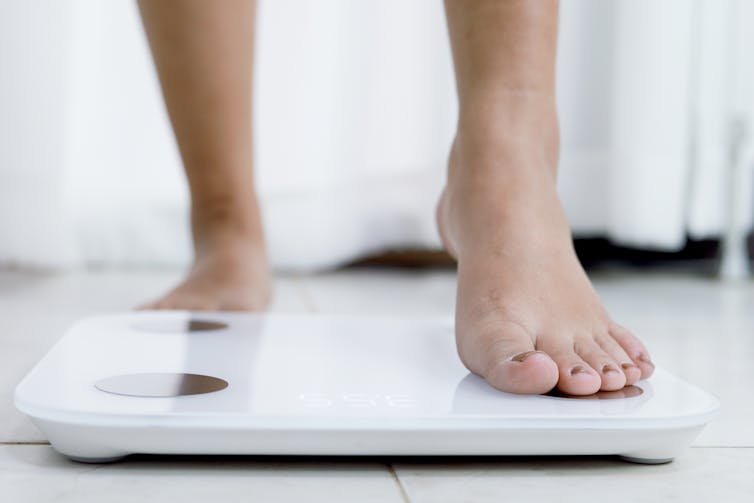
A person steps onto bathroom scales, their ankles and feet visible.
Weight loss is a trigger for eating disorders. Shutterstock

But disorders weren’t more severe

Despite an increase in anorexia nervosa presentations during the pandemic, there has been no increase in the severity of illness. Anorexia nervosa presentations throughout 2020 were actually less severe than in previous years.

There was also no change in the number of patients presenting to the eating disorder clinic experiencing depression or anxiety.

We’ve also seen similar increases in patient presentations for disordered eating and exercise behaviours in other parts of Australia during the pandemic.

What does this mean for the future?

The foundations for mental well-being are formed during adolescence, so access to timely, quality health care for emerging mental health problems is vital.

Since COVID restrictions can be a trigger, families should keep an eye on their children and adolescents to identify disordered behaviours.

Early and intense treatment is often crucial to recovery and maintaining this long-term. With restrictions on social interactions, families play a much bigger support role and should be empowered to assist the young person during this time of uncertainty.

There is also likely to be increased demand for eating disorder services moving out of lockdown, as more people who have developed disordered behaviours become ill and seek treatment.

If this article has raised issues for you or your child, you can call Lifeline on 13 11 14 or Kids Helpline on 1800 55 1800. Resources are also available at The Butterfly Foundation.

Gabriella Springall, PhD candidate, Murdoch Children’s Research Institute

This article is republished from The Conversation under a Creative Commons license. Read the original article.


Tags: SB001
DMCA.com Protection Status

SUBSCRIBE to our NEWSLETTER

[mc4wp_form id=”2384248″]

Don't Miss

The evolution of Aesthetic Surgery through the lens of Dr Kourosh Tavakoli

by Pauline Torongo
4 December 2025
The evolution of Aesthetic Surgery through the lens of Dr. Kourosh Tavakoli
Health & Wellness

As global interest in Australian cosmetic surgery continues to grow, the combination of regulation, research and emerging digital tools is...

Read moreDetails

Ryan: Building real freedom through e-commerce

by Pauline Torongo
27 November 2025
Ryan: Building real freedom through e-commerce
Business & Finance

Ryan’s greatest achievement isn’t any single business or revenue milestone — it’s the ecosystem he’s built through the Change community.

Read moreDetails

Design Australia Group: Redefining Drafting as the engine of housing growth

by Pauline Torongo
26 November 2025
Design Australia Group: Redefining Drafting as the engine of housing growth
Business & Finance

Australia is under pressure to build homes faster, but design bottlenecks slow progress. Design Australia Group is fixing this by...

Read moreDetails

Louis Guy Detata builds Global Trading Empires through autonomous systems and disciplined leadership

by Pauline Torongo
25 November 2025
Louis Guy Detata builds Global Trading Empires through autonomous systems and disciplined leadership
Business & Finance

The path from investment banking to leading a global trading platform has taught Louis Detata that sustainable success requires more...

Read moreDetails

Burning Eucalyptus Wood: Tips, Advantages, Disadvantages & Alternatives

by Fazila Olla-Logday
20 November 2025
Image Supplied
Enviroment

Learn about burning eucalyptus wood for stoves and fireplaces. Discover benefits, drawbacks, harvesting tips, and better alternative firewood options for...

Read moreDetails

Everything Parents Need to Know About Baby Soft Play and Why It’s a Game Changer

by Fazila Olla-Logday
11 November 2025
Everything Parents Need to Know About Baby Soft Play
Health & Wellness

Baby soft play is a fun, safe, and educational way for little ones to explore and grow. Discover the benefits...

Read moreDetails

WOMAD Sets Up a New Camp in Wiltshire – Australian festival fans take note!

by Kris Griffiths
11 November 2025
Kumbia Boruka brought their reggae and dancehall flavour to the Taste the World Stage at WOMAD 2024 - Credit - Mike Massaro
Entertainment

With its 2026 edition moving to Neston Park in England, WOMAD offers Aussie music lovers a chance to reconnect with global...

Read moreDetails
Load More

Copyright © Blue Sky Publications Ltd. All Rights Reserved.
australiantimes.co.uk is a division of Blue Sky Publications Ltd. Reproduction without permission prohibited. DMCA.com Protection Status

  • About us
  • Write for Us
  • Advertise
  • Contact us
  • T&Cs, Privacy and GDPR
No Result
View All Result
  • News
    • Weather
    • Sport
    • Technology
    • Business & Finance
      • Currency Zone
    • Lotto Results
      • The Lott
  • Lifestyle
    • Entertainment
    • Horoscopes
    • Health & Wellness
    • Recipes
  • Travel
  • Expat Life
  • Move to Australia

Copyright © Blue Sky Publications Ltd. All Rights Reserved.
australiantimes.co.uk is a division of Blue Sky Publications Ltd. Reproduction without permission prohibited. DMCA.com Protection Status

No Result
View All Result
  • News
    • Weather
    • Sport
    • Technology
    • Business & Finance
      • Currency Zone
    • Lotto Results
      • The Lott
  • Lifestyle
    • Entertainment
    • Horoscopes
    • Health & Wellness
    • Recipes
  • Travel
  • Expat Life
  • Move to Australia

Copyright © Blue Sky Publications Ltd. All Rights Reserved.
australiantimes.co.uk is a division of Blue Sky Publications Ltd. Reproduction without permission prohibited. DMCA.com Protection Status





