

• Advertise
  • About us
  • Terms and Conditions
  • Contact us
Saturday, December 6, 2025
Australian Times News
  • News
    • Weather
    • Sport
    • Technology
    • Business & Finance
      • Currency Zone
    • Lotto Results
      • The Lott
  • Lifestyle
    • Entertainment
    • Horoscopes
    • Health & Wellness
    • Recipes
  • Travel
  • Expat Life
  • Move to Australia
No Result
View All Result
  • News
    • Weather
    • Sport
    • Technology
    • Business & Finance
      • Currency Zone
    • Lotto Results
      • The Lott
  • Lifestyle
    • Entertainment
    • Horoscopes
    • Health & Wellness
    • Recipes
  • Travel
  • Expat Life
  • Move to Australia
No Result
View All Result
Australian Times News
No Result
View All Result
Home News

Almost 60 coral species around Lizard Island are ‘missing’ – and a Great Barrier Reef extinction crisis could be next

The federal government has opposed a recommendation by a United Nations body that the Great Barrier Reef be listed as “in danger”.

The Conversation by The Conversation
03-07-2021 09:17
in News
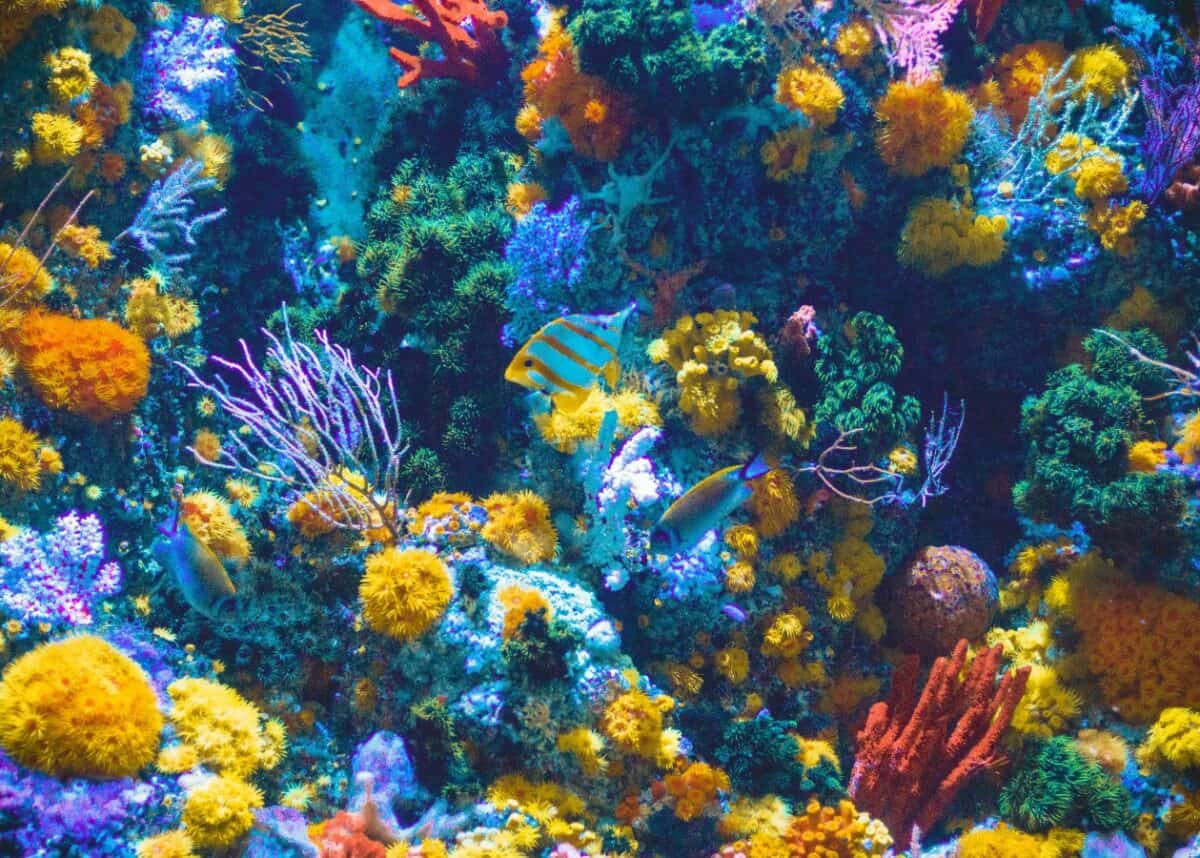
Photo by Shaun Low on Unsplash

Photo by Shaun Low on Unsplash

Zoe Richards, Curtin University

The federal government has opposed a recommendation by a United Nations body that the Great Barrier Reef be listed as “in danger”. But there’s no doubt the natural wonder is in dire trouble. In new research, my colleagues and I provide fresh insight into the plight of many coral species.

Worsening climate change, and subsequent marine heatwaves, have led to mass coral deaths on tropical reefs. However, there are few estimates of how reduced overall coral cover is linked to declines in particular coral species.

Our research examined 44 years of coral distribution records around Lizard Island, at the northern end of the Great Barrier Reef. We found 16% of coral species have not been seen for many years and are at risk of either local extinction, or disappearing from parts of their local range.

This is alarming, because local extinctions often signal wider regional – and ultimately global – species extinction events.
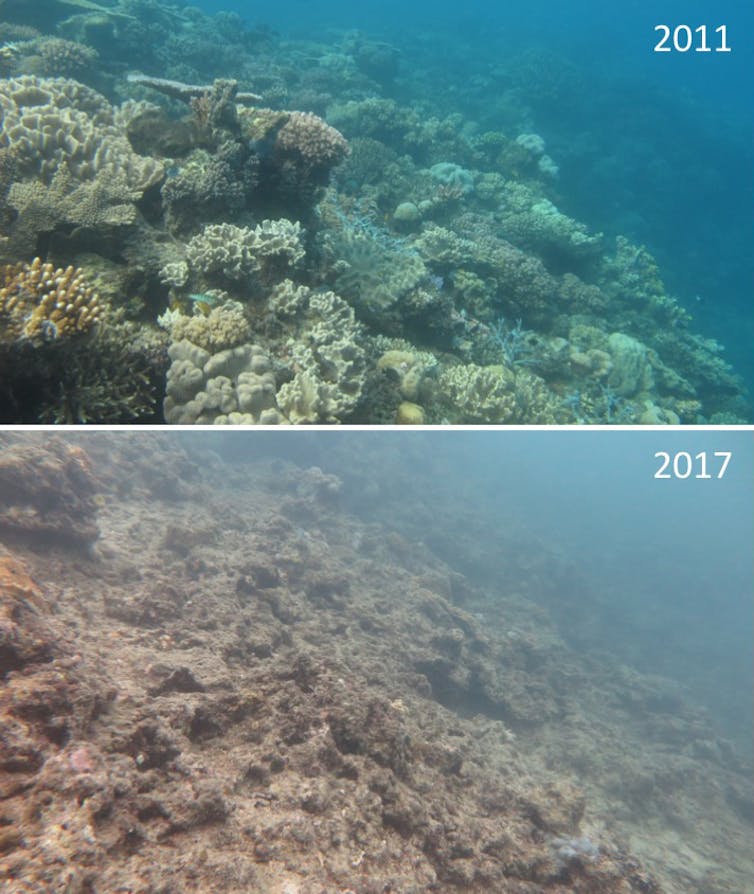
Healthy coral near Lizard Island in 2011, top, then six years later after two bleaching events, bottom.
Healthy coral near Lizard Island in 2011, top, then six years later after two bleaching events, bottom. Zoe Richards

Sobering findings

The Lizard Island reef system is 270 kilometres north of Cairns. It has suffered major disturbances over the past four decades: repeated outbreaks of crown-of-thorns seastars, category 4 cyclones in 2014 and 2015, and coral bleaching events in 2016, 2017 and 2020.

Our research focused on “hermatypic” corals around Lizard Island. These corals deposit calcium carbonate and form the hard framework of the reef.


AlsoRead...

Ryan: Building real freedom through e-commerce

Ryan: Building real freedom through e-commerce

27 November 2025
Design Australia Group: Redefining Drafting as the engine of housing growth

Design Australia Group: Redefining Drafting as the engine of housing growth

26 November 2025

We undertook hard coral biodiversity surveys four times between 2011 and 2020, across 14 sites. We combined the results with published and photographic species records from 1976 to 2020.
red fleshy coral with blue spots
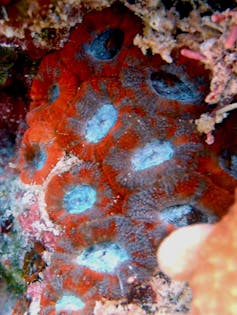
Micromussa lordhowensis is popular in the aquarium trade. Zoe Richards

Of 368 hard coral species recorded around Lizard Island, 28 (7.6%) have not been reliably recorded since before 2011 and may be at risk of local extinction. A further 31 species (8.4%) have not been recorded since 2015 and may be at risk of range reduction (disappearance from parts of its local range).

The “missing” coral species include:

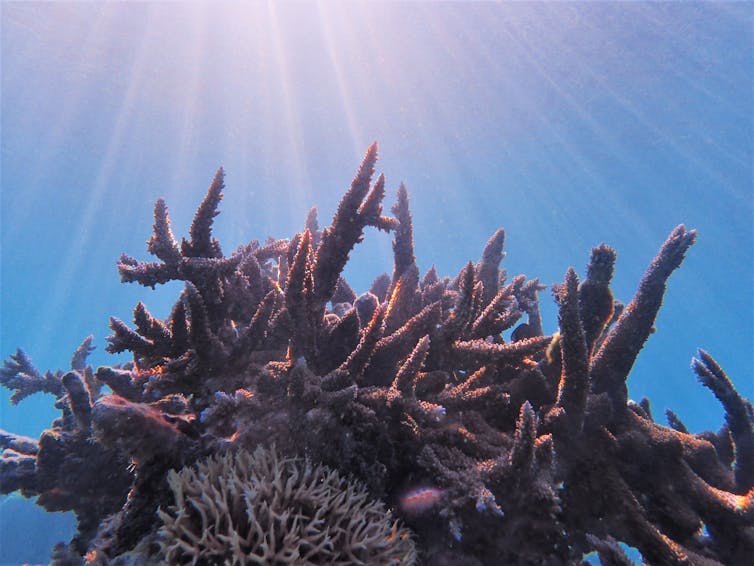
  • Acropora abrotanoides, a robust branching shallow water coral that lives on the reef crest and reef flat has not been since since 2009
  • Micromussa lordhowensis, a low-growing coral with colourful fleshy polyps. Popular in the aquarium trade, it often grows on reef slopes but has not been seen since 2005
  • Acropora aspera, a branching coral which prefers very shallow water and has been recorded just once, at a single site, since 2011.

The finding that 59 coral species are at risk of local extinction or range reduction is significant. Local range reductions are often precursors to local species extinctions. And local species extinctions are often precursors to regional, and ultimately global, extinction events.

Each coral species on the reef has numerous vital functions. It might provide habitat or food to other reef species, or biochemicals which may benefit human health. One thing is clear: every coral species matters.

reddish coral underwater
Acropa abrotanoides, one of the corals ‘missing’ from around Lizard Island. Zoe Richards

A broader extinction crisis?

As human impacts and climate threats mount, there is growing concern about the resilience of coral biodiversity. Our research suggests such concerns are well-founded at Lizard Island.

Coral reef communities are dynamic, and so detecting species loss can be difficult. Our research found around Lizard Island, the diversity of coral species fluctuated over the past decade. Significant declines were recorded from 2011 to 2017, but diversity recovered somewhat in the three following years.

Local extinctions often happen incrementally and can therefore be “invisible”. To detect them, and to account for natural variability in coral communities, long-term biodiversity monitoring across multiple locations and time frames is needed.
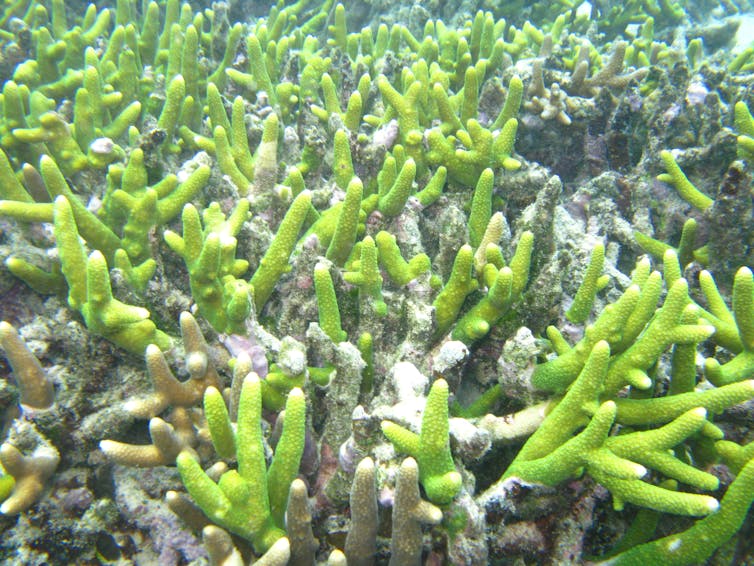
Green coral
Acropora aspera has been recorded just once, at a single location, since 2011. Anne Hoggett

In most locations however, data on the distribution and abundance of all coral species in a community is lacking. This means it can be hard to assess changes, and to understand the damage that climate change and other human-caused stressors are having on each species.

Only with this extra information can scientists conclusively say if the level of local extinction risk at Lizard Island indicates a risk that coral species may become extinct elsewhere – across the Great Barrier Reef and beyond.


Zoe Richards, Senior Research Fellow, Curtin University

This article is republished from The Conversation under a Creative Commons license. Read the original article.


Tags: SB001
DMCA.com Protection Status

SUBSCRIBE to our NEWSLETTER

[mc4wp_form id=”2384248″]

Don't Miss

The evolution of Aesthetic Surgery through the lens of Dr Kourosh Tavakoli

by Pauline Torongo
4 December 2025
The evolution of Aesthetic Surgery through the lens of Dr. Kourosh Tavakoli
Health & Wellness

As global interest in Australian cosmetic surgery continues to grow, the combination of regulation, research and emerging digital tools is...

Read moreDetails

Ryan: Building real freedom through e-commerce

by Pauline Torongo
27 November 2025
Ryan: Building real freedom through e-commerce
Business & Finance

Ryan’s greatest achievement isn’t any single business or revenue milestone — it’s the ecosystem he’s built through the Change community.

Read moreDetails

Design Australia Group: Redefining Drafting as the engine of housing growth

by Pauline Torongo
26 November 2025
Design Australia Group: Redefining Drafting as the engine of housing growth
Business & Finance

Australia is under pressure to build homes faster, but design bottlenecks slow progress. Design Australia Group is fixing this by...

Read moreDetails

Louis Guy Detata builds Global Trading Empires through autonomous systems and disciplined leadership

by Pauline Torongo
25 November 2025
Louis Guy Detata builds Global Trading Empires through autonomous systems and disciplined leadership
Business & Finance

The path from investment banking to leading a global trading platform has taught Louis Detata that sustainable success requires more...

Read moreDetails

Burning Eucalyptus Wood: Tips, Advantages, Disadvantages & Alternatives

by Fazila Olla-Logday
20 November 2025
Image Supplied
Enviroment

Learn about burning eucalyptus wood for stoves and fireplaces. Discover benefits, drawbacks, harvesting tips, and better alternative firewood options for...

Read moreDetails

Everything Parents Need to Know About Baby Soft Play and Why It’s a Game Changer

by Fazila Olla-Logday
11 November 2025
Everything Parents Need to Know About Baby Soft Play
Health & Wellness

Baby soft play is a fun, safe, and educational way for little ones to explore and grow. Discover the benefits...

Read moreDetails

WOMAD Sets Up a New Camp in Wiltshire – Australian festival fans take note!

by Kris Griffiths
11 November 2025
Kumbia Boruka brought their reggae and dancehall flavour to the Taste the World Stage at WOMAD 2024 - Credit - Mike Massaro
Entertainment

With its 2026 edition moving to Neston Park in England, WOMAD offers Aussie music lovers a chance to reconnect with global...

Read moreDetails
Load More

Copyright © Blue Sky Publications Ltd. All Rights Reserved.
australiantimes.co.uk is a division of Blue Sky Publications Ltd. Reproduction without permission prohibited. DMCA.com Protection Status

  • About us
  • Write for Us
  • Advertise
  • Contact us
  • T&Cs, Privacy and GDPR
No Result
View All Result
  • News
    • Weather
    • Sport
    • Technology
    • Business & Finance
      • Currency Zone
    • Lotto Results
      • The Lott
  • Lifestyle
    • Entertainment
    • Horoscopes
    • Health & Wellness
    • Recipes
  • Travel
  • Expat Life
  • Move to Australia

Copyright © Blue Sky Publications Ltd. All Rights Reserved.
australiantimes.co.uk is a division of Blue Sky Publications Ltd. Reproduction without permission prohibited. DMCA.com Protection Status

No Result
View All Result
  • News
    • Weather
    • Sport
    • Technology
    • Business & Finance
      • Currency Zone
    • Lotto Results
      • The Lott
  • Lifestyle
    • Entertainment
    • Horoscopes
    • Health & Wellness
    • Recipes
  • Travel
  • Expat Life
  • Move to Australia

Copyright © Blue Sky Publications Ltd. All Rights Reserved.
australiantimes.co.uk is a division of Blue Sky Publications Ltd. Reproduction without permission prohibited. DMCA.com Protection Status





