

• Advertise
  • About us
  • Terms and Conditions
  • Contact us
Saturday, December 6, 2025
Australian Times News
  • News
    • Weather
    • Sport
    • Technology
    • Business & Finance
      • Currency Zone
    • Lotto Results
      • The Lott
  • Lifestyle
    • Entertainment
    • Horoscopes
    • Health & Wellness
    • Recipes
  • Travel
  • Expat Life
  • Move to Australia
No Result
View All Result
  • News
    • Weather
    • Sport
    • Technology
    • Business & Finance
      • Currency Zone
    • Lotto Results
      • The Lott
  • Lifestyle
    • Entertainment
    • Horoscopes
    • Health & Wellness
    • Recipes
  • Travel
  • Expat Life
  • Move to Australia
No Result
View All Result
Australian Times News
No Result
View All Result
Home News

Air pollution: science shows there’s no safe limit – here’s how laws must change

Air pollution is the largest environmental risk to public health. Outdoor air pollution causes around four million premature deaths globally each year, while a further three million deaths are linked to pollution indoors – mainly from open cooking and heating fires in developing countries.

The Conversation by The Conversation
07-09-2021 22:29
in News
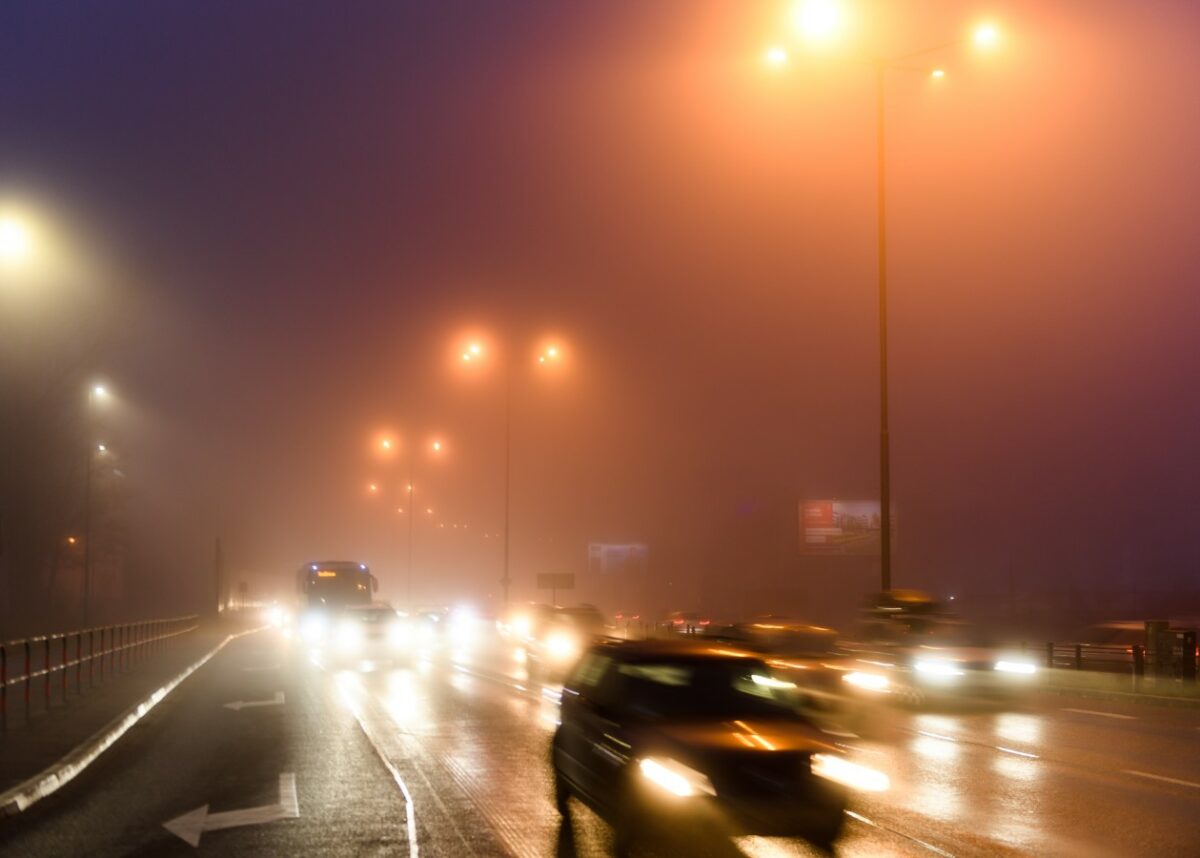
Photo by Jacek Dylag on Unsplash

Photo by Jacek Dylag on Unsplash

William Bloss, University of Birmingham

Air pollution is the largest environmental risk to public health. Outdoor air pollution causes around four million premature deaths globally each year, while a further three million deaths are linked to pollution indoors – mainly from open cooking and heating fires in developing countries.

The most harmful air pollutants in urban areas are nitrogen dioxide gas (NO₂) and fine particulate matter, often referred to as PM2.5 – particles smaller than 2.5 micrometres that can be inhaled deep into the lungs. In cities, NO₂ largely comes from roads, particularly older diesel vehicles. PM2.5 sources include combustion, wood fires, industry, cooking, agriculture and vehicle exhausts. These particles last for longer in the air than NO₂ and together are a threat to heart and lung health, contributing to as many as 36,000 deaths each year in the UK.

Most countries have laws to maintain air pollution at safe levels in order to protect human health. Air quality standards are supposed to be enforced when these pollution levels are exceeded, but what do scientists know about the safe limit for air pollution?

In England, the legal limit for PM2.5 is set at 25 micrograms per cubic metre of air as a yearly average. Meanwhile, the World Health Organization (WHO) recommends 10 micrograms. But even that radically smaller target was set in 2005, and there have been great strides in understanding how air pollution affects the body since then.

Here’s what the science is telling us so far.

How much is too much?

When trying to quantify how air pollutants affect health, researchers often measure associations between health conditions and air pollution exposure averaged over a large group of people. These kinds of studies – which resemble those carried out by epidemiologists to study diseases like COVID-19 – capture the health effects of air pollution and are carefully designed to remove the influence of other pollutants, as well as demographic and socio-economic factors. Alongside this, researchers study the ways air pollutants enter the body and affect organs such as the lungs, heart and brain.


AlsoRead...

Ryan: Building real freedom through e-commerce

Ryan: Building real freedom through e-commerce

27 November 2025
Design Australia Group: Redefining Drafting as the engine of housing growth

Design Australia Group: Redefining Drafting as the engine of housing growth

26 November 2025

A series of recent studies strengthened the confidence scientists have in the effects of pollutants on health. The research showed that there is no evidence for a threshold in the health effects of fine particles. In other words, there’s no level of exposure to PM2.5 below which negative health effects aren’t seen.

Some level of air pollution is unavoidable. Countries are unlikely to eliminate all emissions from their many sources. Even in a net-zero world, we’d probably still breathe in fine particles from the brake pads and tires of electric vehicles. Air quality standards need to be proportionate to society, as well as protect the most vulnerable people.

Improving air quality laws

Governments set legally binding air quality targets, and England’s are due to be updated in the autumn’s Environment Bill. The UK government’s 2019 Clean Air Strategy aimed to halve the number of people living in places where the WHO guideline level of 10 micrograms per cubic metre is exceeded, by 2025. There could also be changes to the national limit of 25 micrograms, in light of the new science.

There is an opportunity here to develop laws that make the air safer to breathe, rather than simply maintain pollution levels at a safe limit, which research suggests probably doesn’t exist. As well as a limit value – a level that is not to be exceeded – new air-quality standards could also include a target for reducing exposure.

Limit values are often treated as a license to pollute up to a threshold and don’t drive improvements in air quality where pollutant levels are high but not over the limit. Exposure reduction targets instead aim to lower air pollution levels across an entire population. These targets can improve air quality for everyone, but inevitably divert resources from measures targeted at the most polluted areas, which tend to be where the most deprived communities live.

Carefully designed, air quality standards can balance both approaches, providing population-wide health benefits while ensuring no areas are exposed to disproportionately high levels of pollution.

William Bloss, Professor of Atmospheric Science, University of Birmingham

This article is republished from The Conversation under a Creative Commons license. Read the original article.


Tags: SB001
DMCA.com Protection Status

SUBSCRIBE to our NEWSLETTER

[mc4wp_form id=”2384248″]

Don't Miss

The evolution of Aesthetic Surgery through the lens of Dr Kourosh Tavakoli

by Pauline Torongo
4 December 2025
The evolution of Aesthetic Surgery through the lens of Dr. Kourosh Tavakoli
Health & Wellness

As global interest in Australian cosmetic surgery continues to grow, the combination of regulation, research and emerging digital tools is...

Read moreDetails

Ryan: Building real freedom through e-commerce

by Pauline Torongo
27 November 2025
Ryan: Building real freedom through e-commerce
Business & Finance

Ryan’s greatest achievement isn’t any single business or revenue milestone — it’s the ecosystem he’s built through the Change community.

Read moreDetails

Design Australia Group: Redefining Drafting as the engine of housing growth

by Pauline Torongo
26 November 2025
Design Australia Group: Redefining Drafting as the engine of housing growth
Business & Finance

Australia is under pressure to build homes faster, but design bottlenecks slow progress. Design Australia Group is fixing this by...

Read moreDetails

Louis Guy Detata builds Global Trading Empires through autonomous systems and disciplined leadership

by Pauline Torongo
25 November 2025
Louis Guy Detata builds Global Trading Empires through autonomous systems and disciplined leadership
Business & Finance

The path from investment banking to leading a global trading platform has taught Louis Detata that sustainable success requires more...

Read moreDetails

Burning Eucalyptus Wood: Tips, Advantages, Disadvantages & Alternatives

by Fazila Olla-Logday
20 November 2025
Image Supplied
Enviroment

Learn about burning eucalyptus wood for stoves and fireplaces. Discover benefits, drawbacks, harvesting tips, and better alternative firewood options for...

Read moreDetails

Everything Parents Need to Know About Baby Soft Play and Why It’s a Game Changer

by Fazila Olla-Logday
11 November 2025
Everything Parents Need to Know About Baby Soft Play
Health & Wellness

Baby soft play is a fun, safe, and educational way for little ones to explore and grow. Discover the benefits...

Read moreDetails

WOMAD Sets Up a New Camp in Wiltshire – Australian festival fans take note!

by Kris Griffiths
11 November 2025
Kumbia Boruka brought their reggae and dancehall flavour to the Taste the World Stage at WOMAD 2024 - Credit - Mike Massaro
Entertainment

With its 2026 edition moving to Neston Park in England, WOMAD offers Aussie music lovers a chance to reconnect with global...

Read moreDetails
Load More

Copyright © Blue Sky Publications Ltd. All Rights Reserved.
australiantimes.co.uk is a division of Blue Sky Publications Ltd. Reproduction without permission prohibited. DMCA.com Protection Status

  • About us
  • Write for Us
  • Advertise
  • Contact us
  • T&Cs, Privacy and GDPR
No Result
View All Result
  • News
    • Weather
    • Sport
    • Technology
    • Business & Finance
      • Currency Zone
    • Lotto Results
      • The Lott
  • Lifestyle
    • Entertainment
    • Horoscopes
    • Health & Wellness
    • Recipes
  • Travel
  • Expat Life
  • Move to Australia

Copyright © Blue Sky Publications Ltd. All Rights Reserved.
australiantimes.co.uk is a division of Blue Sky Publications Ltd. Reproduction without permission prohibited. DMCA.com Protection Status

No Result
View All Result
  • News
    • Weather
    • Sport
    • Technology
    • Business & Finance
      • Currency Zone
    • Lotto Results
      • The Lott
  • Lifestyle
    • Entertainment
    • Horoscopes
    • Health & Wellness
    • Recipes
  • Travel
  • Expat Life
  • Move to Australia

Copyright © Blue Sky Publications Ltd. All Rights Reserved.
australiantimes.co.uk is a division of Blue Sky Publications Ltd. Reproduction without permission prohibited. DMCA.com Protection Status





