

• Advertise
  • About us
  • Terms and Conditions
  • Contact us
Saturday, December 6, 2025
Australian Times News
  • News
    • Weather
    • Sport
    • Technology
    • Business & Finance
      • Currency Zone
    • Lotto Results
      • The Lott
  • Lifestyle
    • Entertainment
    • Horoscopes
    • Health & Wellness
    • Recipes
  • Travel
  • Expat Life
  • Move to Australia
No Result
View All Result
  • News
    • Weather
    • Sport
    • Technology
    • Business & Finance
      • Currency Zone
    • Lotto Results
      • The Lott
  • Lifestyle
    • Entertainment
    • Horoscopes
    • Health & Wellness
    • Recipes
  • Travel
  • Expat Life
  • Move to Australia
No Result
View All Result
Australian Times News
No Result
View All Result
Home News

A new fossil discovery may add hundreds of millions of years to the evolutionary history of animals

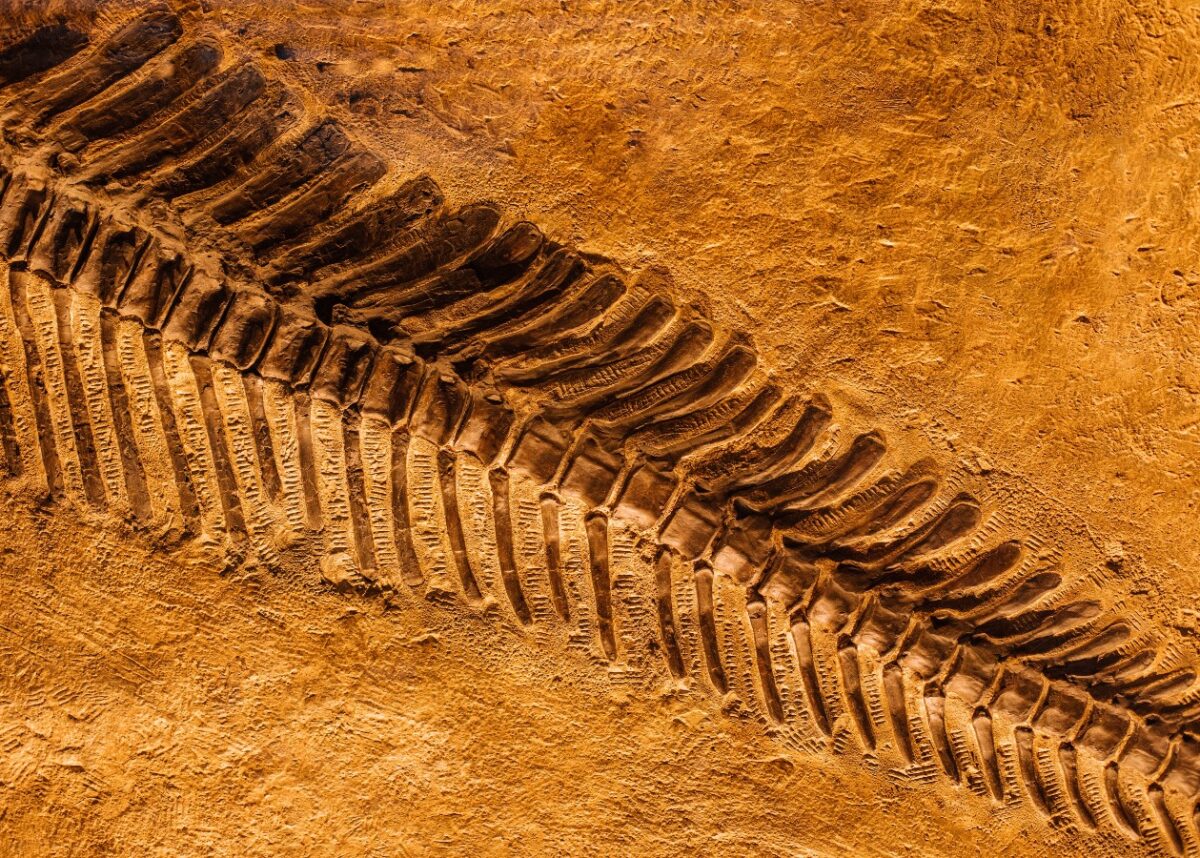
Information about evolutionary events hundreds of millions of years ago is mainly gleaned from fossils. Familiar fossils are shells, exoskeletons and bones that organisms make while alive.

The Conversation by The Conversation
19-10-2021 06:23
in News
Photo by Kvnga on Unsplash

Photo by Kvnga on Unsplash

Elizabeth C. Turner, Laurentian University

Ever wonder how and when animals swanned onto the evolutionary stage? When, where and why did animals first appear? What were they like?

Life has existed for much of Earth’s 4.5-billion-year history, but for most of that time it consisted exclusively of bacteria.


Although scientists have been investigating the evidence of biological evolution for over a century, some parts of the fossil record remain maddeningly enigmatic, and finding evidence of Earth’s earliest animals has been particularly challenging.

Hidden evolution

Information about evolutionary events hundreds of millions of years ago is mainly gleaned from fossils. Familiar fossils are shells, exoskeletons and bones that organisms make while alive. These so-called “hard parts” first appear in rocks deposited during the “Cambrian explosion,” slightly less than 540 million years ago.

The seemingly sudden appearance of diverse, complex animals, many with hard parts, implies that there was a preceding interval during which early soft-bodied animals with no hard parts evolved from simpler animals. Unfortunately, until now, possible evidence of fossil animals in the interval of “hidden” evolution has been very rare and difficult to understand, leaving the timing and nature of evolutionary events unclear.

This conundrum, known as “Darwin’s dilemma,” remains tantalizing and unresolved 160 years after the publication of On the Origin of Species.


AlsoRead...

Ryan: Building real freedom through e-commerce

Ryan: Building real freedom through e-commerce

27 November 2025
Design Australia Group: Redefining Drafting as the engine of housing growth

Design Australia Group: Redefining Drafting as the engine of housing growth

26 November 2025

Required oxygen

There is indirect evidence regarding how and when animals may have appeared. Animals by definition ingest pre-existing organic matter, and their metabolisms require a certain level of ambient oxygen. It has been assumed that animals could not appear, or at least not diversify, until after a major oxygen increase in the Neoproterozoic Era, sometime between 815 and 540 million years ago, resulting from accumulation of oxygen produced by photosynthesizing cyanobacteria, also known as blue-green algae.

It is widely accepted that sponges are the most basic animal in the animal evolutionary tree and therefore probably were first to appear. Yes, sponges are animals: they use oxygen and feed by sucking water containing organic matter through their bodies. The earliest animals were probably sponge-related (the “sponge-first” hypothesis), and may have emerged hundreds of millions of years prior to the Cambrian, as suggested by a genetic method called molecular phylogeny, which analyzes genetic differences.


Based on these reasonable assumptions, sponges may have existed as much as 900 million years ago. So, why have we not found fossil evidence of sponges in rocks from those hundreds of millions of intervening years?
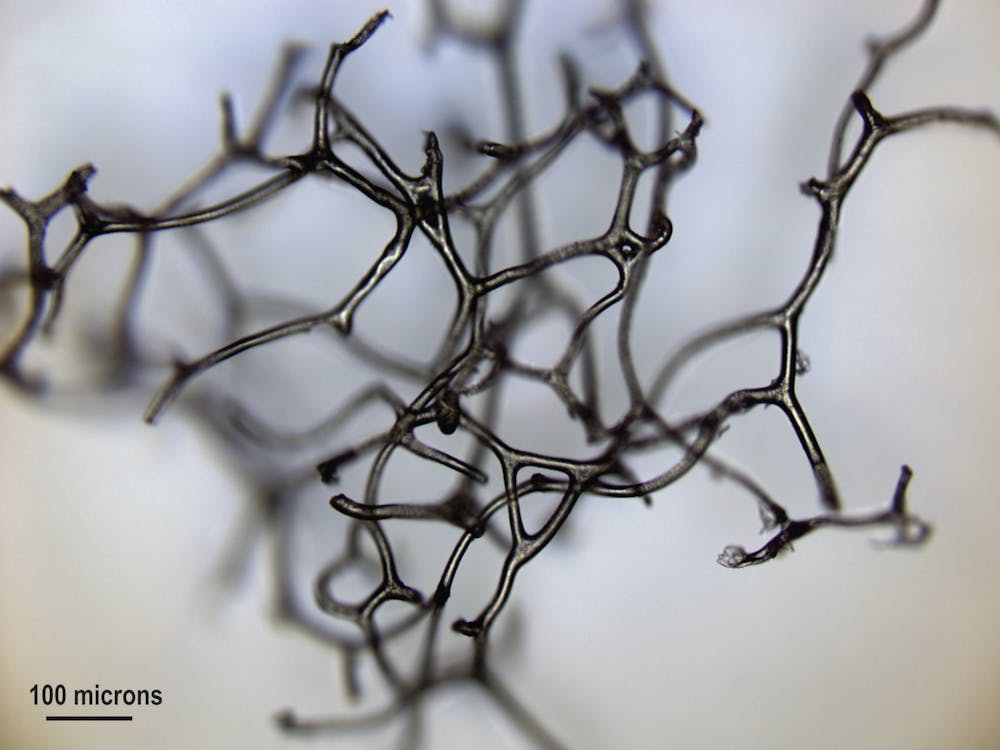
Photograph of sponge spongin
Under the right conditions, soft sponge tissue made from spongin fibres can create a distinctive fossil. (Elizabeth C. Turner), Author provided

Part of the answer to this question is that sponges do not have standard hard parts (shells, bones). Although some sponges have an internal skeleton made of microscopic mineralized rods called spicules, no convincing spicules have been found in rocks dating from the interval of hidden early animal evolution. However, some sponge types have a skeleton made of tough protein fibres called spongin, forming a distinctive, microscopic, three-dimensional meshwork, identical to a bath sponge.

Work on modern and fossil sponges has shown that these sponges can be preserved in the rock record when their soft tissue is calcified during decay. If the calcified mass hardens around spongin fibres before they too decay, a distinctive microscopic meshwork of complexly branching tubes results appears in the rock. The branching configuration is unlike that of algae, bacteria or fungi, and is well known from limestones younger than 540 million years.

Unusual fossils

I am a geologist and paleobiologist who works on very old limestone. Recently, I described this exact microstructure in 890-million-year-old rocks from northern Canada, proposing that it could be evidence of sponges that are several hundred million years older than the next-youngest uncontested sponge fossil.
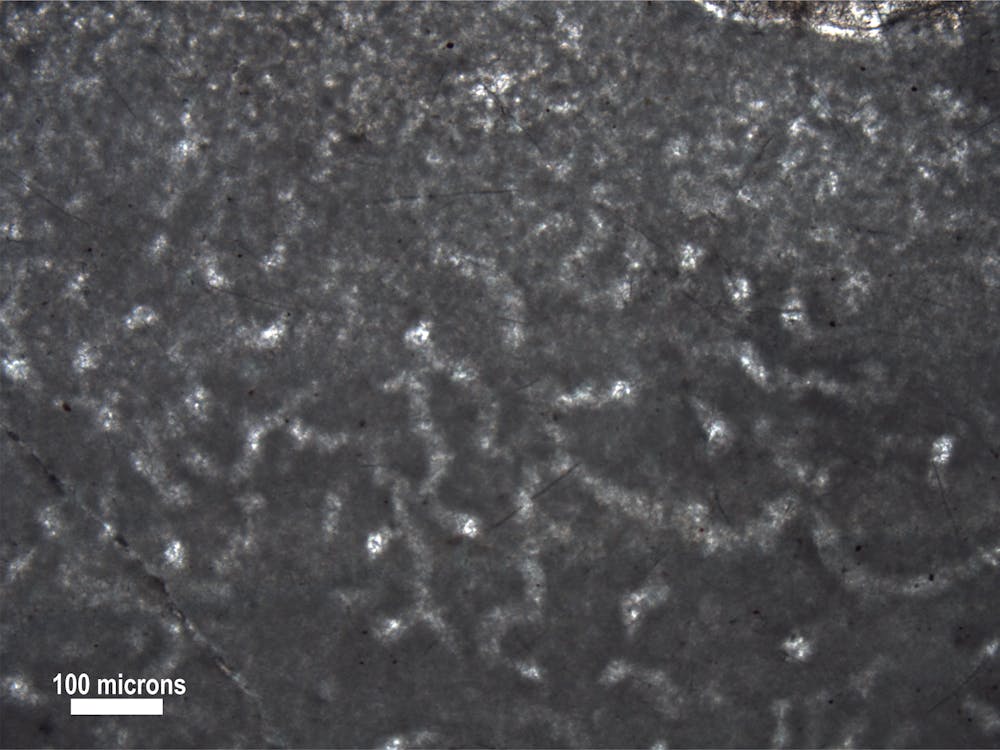
A magnified image of a possible sponge fossil
This may be an 890 million year old sponge fossil. (Elizabeth C. Turner), Author provided

Although my proposal may initially seem outrageous, it is consistent with predictions and assumptions that are common in the paleontological community: the new material seems to validate an extrapolated timeline and a predicted identity for early animals that are already widely accepted.

If these are indeed sponge fossils, animal evolution can be pushed back by several hundred million years.

The early possible sponges that I describe lived with localised cyanobacterial communities that produced oxygen oases in an otherwise low-oxygen world, prior to the Neoproterozoic oxygenation event. These early sponges may have continued living in similar environments, possibly unchanged and unchallenged by evolutionary pressure, for up to several hundred million years, before more diverse animals emerged.

The existence of 890-million-year-old animals would also indicate that biological evolution was not substantially affected by the controversial Cryogenian glacial episodes — so-called “snowball Earth” — that began around 720 million years ago.

My unusual fossil material may provide a new perspective on Darwin’s dilemma. However, radical new ideas are generally not fully accepted by the scientific community without vigorous discussion; I expect lively controversy to ensue. At some point, probably years in the future, a consensus may develop based on further work. Until then, enjoy the debate!

Elizabeth C. Turner, Professor, Earth Sciences, Laurentian University

This article is republished from The Conversation under a Creative Commons license. Read the original article.


Tags: SB001
DMCA.com Protection Status

SUBSCRIBE to our NEWSLETTER

[mc4wp_form id=”2384248″]

Don't Miss

The evolution of Aesthetic Surgery through the lens of Dr Kourosh Tavakoli

by Pauline Torongo
4 December 2025
The evolution of Aesthetic Surgery through the lens of Dr. Kourosh Tavakoli
Health & Wellness

As global interest in Australian cosmetic surgery continues to grow, the combination of regulation, research and emerging digital tools is...

Read moreDetails

Ryan: Building real freedom through e-commerce

by Pauline Torongo
27 November 2025
Ryan: Building real freedom through e-commerce
Business & Finance

Ryan’s greatest achievement isn’t any single business or revenue milestone — it’s the ecosystem he’s built through the Change community.

Read moreDetails

Design Australia Group: Redefining Drafting as the engine of housing growth

by Pauline Torongo
26 November 2025
Design Australia Group: Redefining Drafting as the engine of housing growth
Business & Finance

Australia is under pressure to build homes faster, but design bottlenecks slow progress. Design Australia Group is fixing this by...

Read moreDetails

Louis Guy Detata builds Global Trading Empires through autonomous systems and disciplined leadership

by Pauline Torongo
25 November 2025
Louis Guy Detata builds Global Trading Empires through autonomous systems and disciplined leadership
Business & Finance

The path from investment banking to leading a global trading platform has taught Louis Detata that sustainable success requires more...

Read moreDetails

Burning Eucalyptus Wood: Tips, Advantages, Disadvantages & Alternatives

by Fazila Olla-Logday
20 November 2025
Image Supplied
Enviroment

Learn about burning eucalyptus wood for stoves and fireplaces. Discover benefits, drawbacks, harvesting tips, and better alternative firewood options for...

Read moreDetails

Everything Parents Need to Know About Baby Soft Play and Why It’s a Game Changer

by Fazila Olla-Logday
11 November 2025
Everything Parents Need to Know About Baby Soft Play
Health & Wellness

Baby soft play is a fun, safe, and educational way for little ones to explore and grow. Discover the benefits...

Read moreDetails

WOMAD Sets Up a New Camp in Wiltshire – Australian festival fans take note!

by Kris Griffiths
11 November 2025
Kumbia Boruka brought their reggae and dancehall flavour to the Taste the World Stage at WOMAD 2024 - Credit - Mike Massaro
Entertainment

With its 2026 edition moving to Neston Park in England, WOMAD offers Aussie music lovers a chance to reconnect with global...

Read moreDetails
Load More

Copyright © Blue Sky Publications Ltd. All Rights Reserved.
australiantimes.co.uk is a division of Blue Sky Publications Ltd. Reproduction without permission prohibited. DMCA.com Protection Status

  • About us
  • Write for Us
  • Advertise
  • Contact us
  • T&Cs, Privacy and GDPR
No Result
View All Result
  • News
    • Weather
    • Sport
    • Technology
    • Business & Finance
      • Currency Zone
    • Lotto Results
      • The Lott
  • Lifestyle
    • Entertainment
    • Horoscopes
    • Health & Wellness
    • Recipes
  • Travel
  • Expat Life
  • Move to Australia

Copyright © Blue Sky Publications Ltd. All Rights Reserved.
australiantimes.co.uk is a division of Blue Sky Publications Ltd. Reproduction without permission prohibited. DMCA.com Protection Status

No Result
View All Result
  • News
    • Weather
    • Sport
    • Technology
    • Business & Finance
      • Currency Zone
    • Lotto Results
      • The Lott
  • Lifestyle
    • Entertainment
    • Horoscopes
    • Health & Wellness
    • Recipes
  • Travel
  • Expat Life
  • Move to Australia

Copyright © Blue Sky Publications Ltd. All Rights Reserved.
australiantimes.co.uk is a division of Blue Sky Publications Ltd. Reproduction without permission prohibited. DMCA.com Protection Status





