

• Advertise
  • About us
  • Terms and Conditions
  • Contact us
Saturday, December 6, 2025
Australian Times News
  • News
    • Weather
    • Sport
    • Technology
    • Business & Finance
      • Currency Zone
    • Lotto Results
      • The Lott
  • Lifestyle
    • Entertainment
    • Horoscopes
    • Health & Wellness
    • Recipes
  • Travel
  • Expat Life
  • Move to Australia
No Result
View All Result
  • News
    • Weather
    • Sport
    • Technology
    • Business & Finance
      • Currency Zone
    • Lotto Results
      • The Lott
  • Lifestyle
    • Entertainment
    • Horoscopes
    • Health & Wellness
    • Recipes
  • Travel
  • Expat Life
  • Move to Australia
No Result
View All Result
Australian Times News
No Result
View All Result
Home News

A new era of planetary exploration: what we discovered on the far side of the Moon

Seven months after it was launched, the US robotic rover Perseverance successfully landed on Mars on February 18 2021. The landing was part of the mission Mars2020 and was viewed live by millions of people worldwide, reflecting the renewed global interest in space exploration. It was soon followed by China’s Tianwen-1, an interplanetary Mars mission consisting of an orbiter, lander and rover called Zhourong.

The Conversation by The Conversation
13-11-2021 06:15
in News
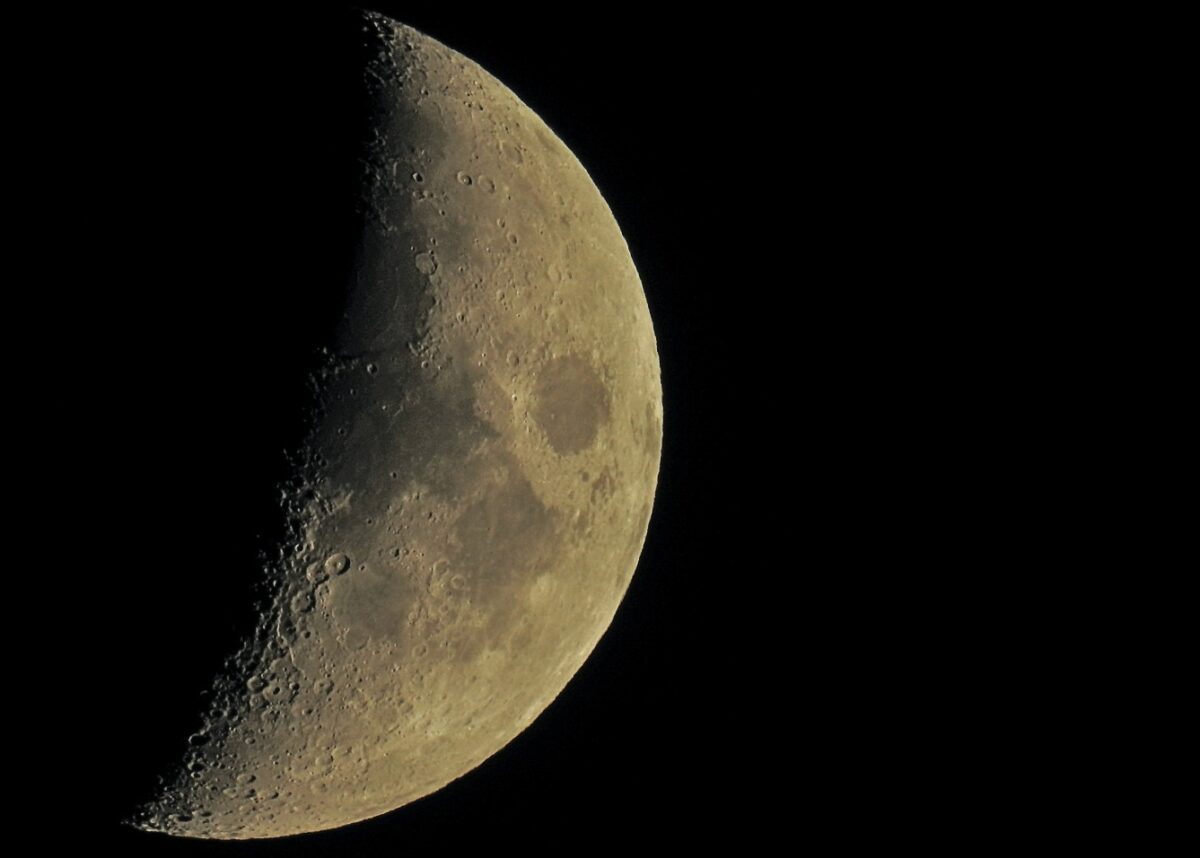
Photo by v2osk on Unsplash

Photo by v2osk on Unsplash

Iraklis Giannakis, University of Aberdeen

Seven months after it was launched, the US robotic rover Perseverance successfully landed on Mars on February 18 2021. The landing was part of the mission Mars2020 and was viewed live by millions of people worldwide, reflecting the renewed global interest in space exploration. It was soon followed by China’s Tianwen-1, an interplanetary Mars mission consisting of an orbiter, lander and rover called Zhourong.

Perseverance and Zhourong were the fifth and sixth planetary rovers deployed in the last decade. The first one was America’s Curiosity which landed on Mars in 2012, followed by China’s three Chang’E missions.

In 2019 the Chang’E-4 lander and its Yutu-2 rover were the first human objects landed on the far side of the Moon – the side that faces away from the Earth. This marked a pivotal milestone in planetary exploration, of equal importance to the Apollo 8 mission in 1968, when the far side of the Moon was seen by humans for the first time.

To analyse the data captured from the Yutu-2 rover, which used ground-penetrating radar (GPR), we developed a tool that could detect in much greater detail the layers beneath the Moon’s surface than had ever been done before. It was also able to provide insights into how the planet evolved.

The far side of the Moon is of great importance due to its interesting geological formations, but this hidden side also blocks all the electromagnetic noise from human activity, making it an ideal place to build radio telescopes. https://www.youtube.com/embed/LuG5vYqHoHY?wmode=transparent&start=0

Ground penetrating radar

Orbiter radars have been used for planetary sciences since the early 2000s, but the recent Chinese and US rover missions were the first to use ground-penetrating radar on site. This ground-breaking radar is now set to become part of the scientific payload of future planetary missions, where it will be used to map the subsurface of landing sites and shed light on what is happening below the ground.


AlsoRead...

Ryan: Building real freedom through e-commerce

Ryan: Building real freedom through e-commerce

27 November 2025
Design Australia Group: Redefining Drafting as the engine of housing growth

Design Australia Group: Redefining Drafting as the engine of housing growth

26 November 2025

GPR has also the ability to retrieve significant information regarding the type of planetary soils and their subsurface layers. This information can be used to get an insight into the geological evolution of an area and even assess its structural stability for future planetary bases and research stations.

Perseverance and Tianwen-1 are currently active, and the first GPR images from Mars are expected to be published in 2022. But the first available planetary on-site GPR data was from the Chang’E-3, E-4 and E-5 lunar missions, where it was used to investigate the structure of surface layers of the far side of the Moon, and provide valuable information about the geological evolution of the area.

Despite the benefits of GPR, one major drawback is its inability to detect layers with smooth boundaries between them. This means gradual variations from one layer to another go undetected, giving the false impression that the subsurface consists of a homogenous block, while in fact it may be a much more complex structure representing a completely different geological history.

Our team developed a new method capable of detecting these layers by using the radar signatures of hidden rocks and boulders. The newly developed tool has been used to process the GPR data captured by Chang’E-4’s Yutu-2 rover which landed in the Von Kármán crater, part of the Aitken Basin at the Moon’s south pole.

The Aitken basin is the biggest and oldest known crater, believed to have been created by a meteoroid impact that penetrated the crust of the Moon and uplifted materials from the top mantle (the interior layer just below it). Our detection tool revealed a previously unseen layered structure in the first 10m of the lunar surface, which had been understood to be one homogenous block.

Using our method, we can make more accurate estimations regarding the depth of the top surface of lunar soil, which is an important way to determine the stability and strength of the soil foundation for developing lunar bases and research stations.

This newly discovered complex layered structure also suggests that small craters are more important and may have contributed much more than previously believed to the materials deposited by meteorite strikes – and the overall evolution of lunar craters.

This means we will have a more coherent understanding of the complex geological history of our satellite, and enable us to predict more accurately what lies beneath the surface of the Moon.


Iraklis Giannakis, Lecturer in geosciences, University of Aberdeen

This article is republished from The Conversation under a Creative Commons license. Read the original article.


Tags: SB001
DMCA.com Protection Status

SUBSCRIBE to our NEWSLETTER

[mc4wp_form id=”2384248″]

Don't Miss

The evolution of Aesthetic Surgery through the lens of Dr Kourosh Tavakoli

by Pauline Torongo
4 December 2025
The evolution of Aesthetic Surgery through the lens of Dr. Kourosh Tavakoli
Health & Wellness

As global interest in Australian cosmetic surgery continues to grow, the combination of regulation, research and emerging digital tools is...

Read moreDetails

Ryan: Building real freedom through e-commerce

by Pauline Torongo
27 November 2025
Ryan: Building real freedom through e-commerce
Business & Finance

Ryan’s greatest achievement isn’t any single business or revenue milestone — it’s the ecosystem he’s built through the Change community.

Read moreDetails

Design Australia Group: Redefining Drafting as the engine of housing growth

by Pauline Torongo
26 November 2025
Design Australia Group: Redefining Drafting as the engine of housing growth
Business & Finance

Australia is under pressure to build homes faster, but design bottlenecks slow progress. Design Australia Group is fixing this by...

Read moreDetails

Louis Guy Detata builds Global Trading Empires through autonomous systems and disciplined leadership

by Pauline Torongo
25 November 2025
Louis Guy Detata builds Global Trading Empires through autonomous systems and disciplined leadership
Business & Finance

The path from investment banking to leading a global trading platform has taught Louis Detata that sustainable success requires more...

Read moreDetails

Burning Eucalyptus Wood: Tips, Advantages, Disadvantages & Alternatives

by Fazila Olla-Logday
20 November 2025
Image Supplied
Enviroment

Learn about burning eucalyptus wood for stoves and fireplaces. Discover benefits, drawbacks, harvesting tips, and better alternative firewood options for...

Read moreDetails

Everything Parents Need to Know About Baby Soft Play and Why It’s a Game Changer

by Fazila Olla-Logday
11 November 2025
Everything Parents Need to Know About Baby Soft Play
Health & Wellness

Baby soft play is a fun, safe, and educational way for little ones to explore and grow. Discover the benefits...

Read moreDetails

WOMAD Sets Up a New Camp in Wiltshire – Australian festival fans take note!

by Kris Griffiths
11 November 2025
Kumbia Boruka brought their reggae and dancehall flavour to the Taste the World Stage at WOMAD 2024 - Credit - Mike Massaro
Entertainment

With its 2026 edition moving to Neston Park in England, WOMAD offers Aussie music lovers a chance to reconnect with global...

Read moreDetails
Load More

Copyright © Blue Sky Publications Ltd. All Rights Reserved.
australiantimes.co.uk is a division of Blue Sky Publications Ltd. Reproduction without permission prohibited. DMCA.com Protection Status

  • About us
  • Write for Us
  • Advertise
  • Contact us
  • T&Cs, Privacy and GDPR
No Result
View All Result
  • News
    • Weather
    • Sport
    • Technology
    • Business & Finance
      • Currency Zone
    • Lotto Results
      • The Lott
  • Lifestyle
    • Entertainment
    • Horoscopes
    • Health & Wellness
    • Recipes
  • Travel
  • Expat Life
  • Move to Australia

Copyright © Blue Sky Publications Ltd. All Rights Reserved.
australiantimes.co.uk is a division of Blue Sky Publications Ltd. Reproduction without permission prohibited. DMCA.com Protection Status

No Result
View All Result
  • News
    • Weather
    • Sport
    • Technology
    • Business & Finance
      • Currency Zone
    • Lotto Results
      • The Lott
  • Lifestyle
    • Entertainment
    • Horoscopes
    • Health & Wellness
    • Recipes
  • Travel
  • Expat Life
  • Move to Australia

Copyright © Blue Sky Publications Ltd. All Rights Reserved.
australiantimes.co.uk is a division of Blue Sky Publications Ltd. Reproduction without permission prohibited. DMCA.com Protection Status





