

• Advertise
  • About us
  • Terms and Conditions
  • Contact us
Saturday, December 6, 2025
Australian Times News
  • News
    • Weather
    • Sport
    • Technology
    • Business & Finance
      • Currency Zone
    • Lotto Results
      • The Lott
  • Lifestyle
    • Entertainment
    • Horoscopes
    • Health & Wellness
    • Recipes
  • Travel
  • Expat Life
  • Move to Australia
No Result
View All Result
  • News
    • Weather
    • Sport
    • Technology
    • Business & Finance
      • Currency Zone
    • Lotto Results
      • The Lott
  • Lifestyle
    • Entertainment
    • Horoscopes
    • Health & Wellness
    • Recipes
  • Travel
  • Expat Life
  • Move to Australia
No Result
View All Result
Australian Times News
No Result
View All Result
Home Lifestyle

Dinosaur footprints show predators as big as _T. rex_ stomped across Australia 160 million years ago

Coal miners came across them while digging in the Walloon Coal Measures at Rosewood, near Ipswich and Oakey, north of Toowoomba, Queensland.

The Conversation by The Conversation
21-06-2020 09:17
in Lifestyle
Predators as big as T. rex stomped across Australia 160 million years ago

Predators as big as T. rex stomped across Australia 160 million years ago Photo by Lisa Yount on Unsplash

Anthony Romilio, The University of Queensland and Steven W. Salisbury, The University of Queensland

Perhaps the most iconic dinosaur is Tyrannosaurus rex, a massive predator that lived in what is now North America. We have now discovered that carnivorous dinosaurs of a similar size existed in ancient Australia as well.
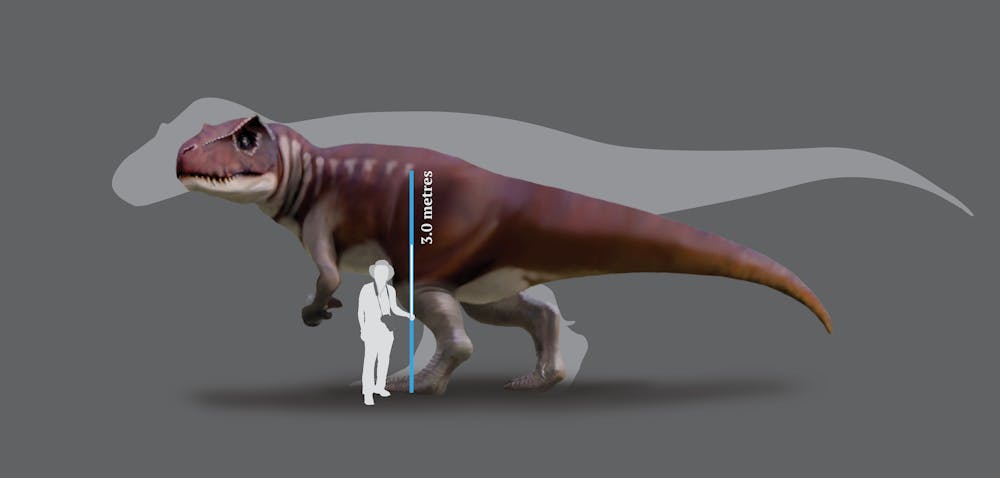
The giant dinosaurs of Queensland were slightly smaller than the largest known T. rex (shown in silhouette). Anthony Romilio, Author provided

Following the footprints

We learned about these carnivores by studying fossils that were discovered up to 90 years ago. Coal miners came across them while digging in the Walloon Coal Measures at Rosewood, near Ipswich and Oakey, north of Toowoomba, Queensland.

The fossils are not bones. They are fossilised footprints, the only form of fossils that record the movements of animals and preserve details of their behaviour and environments they preferred.

While searching through records of fossil footprints in Australia, we came across an archival photograph from the 1930s showing a dinosaur footprint inside a coal mine. While these mines have long since closed, the picture led us to investigate fossil footprints collected at that time and stored in museums, and other footprints like them.
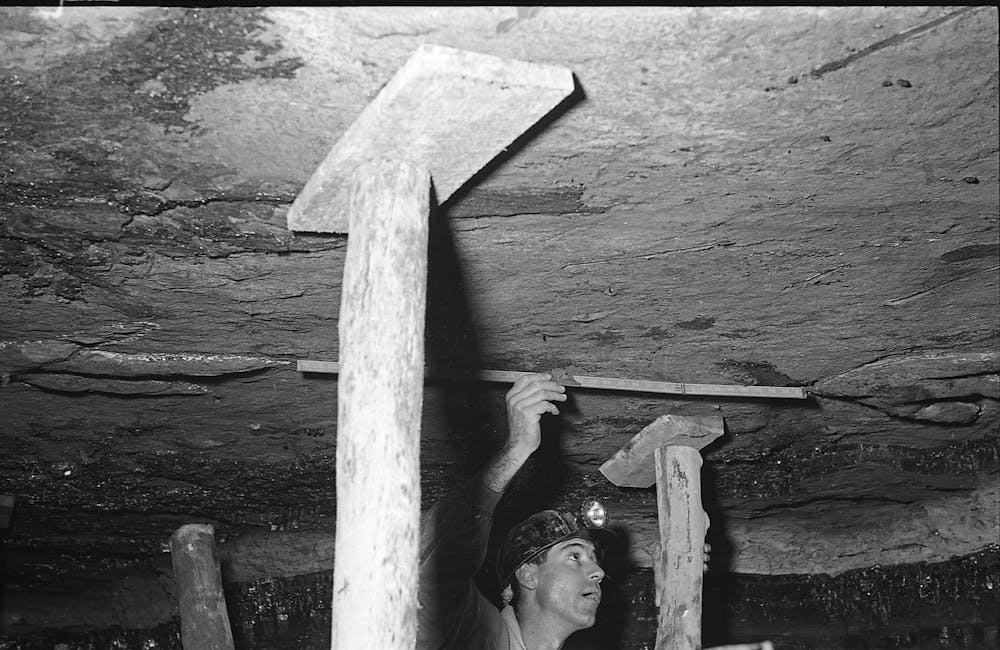
A miner measures footprints found in Rosewood coal mine circa 1966. Queensland Museum, Author provided

Older than T. rex

The specimens we found suggest the richly forested and swampy environment of southern Queensland in the Jurassic Period was home to several types of meat-eating dinosaurs. The smallest would have been the size of an emu, while the largest would have been just under 3 metres tall, almost as large and as imposing as a T. rex.

The footprint of this large dinosaur is almost 80cm long – roughly the distance from the centre of your body to the tip of your outstretched arm. The fossilised track is approximately 160 million years old, 90 million years older than the oldest known T. rex fossils.


AlsoRead...

The evolution of Aesthetic Surgery through the lens of Dr. Kourosh Tavakoli

The evolution of Aesthetic Surgery through the lens of Dr Kourosh Tavakoli

4 December 2025
Design Australia Group: Redefining Drafting as the engine of housing growth

Design Australia Group: Redefining Drafting as the engine of housing growth

26 November 2025

This suggests the print belongs to a different predatory dinosaur. While similar to T. rex in size and dietary preference, these massive ancient Australian trackmakers may have been slimmer and more elongated in appearance than the North American dinosaur icon.

A photograph and a false-colour image showing the depth of one of the footprints. Anthony Romilio, Author provided

Fast runners, formidable predators

As well as individual footprints, we found evidence of trackways where multiple footprints made by the same animal are preserved. Based on what we know about how two-legged animals move, we can use the trackways to figure out how the dinosaurs travelled through their environment.

Several of the larger dinosaurs seem to have been moving at a walking pace, as the lengths of their steps are shorter than the estimated lengths of their legs. However, two trackways had the very large step sizes that are typical of animals on the run.

The step distance suggests these large dinosaurs were moving at speeds of up to 35 kilometres per hour. For comparison, the average human can sprint at around 24 kilometres per hour.

These speeds mean the ancient track-makers would have been formidable predators. Unfortunately, no trackway was preserved for the largest track-maker.

Lucky conditions

Not all kinds of ground are equally suited to preserving tracks for fossilisation. What appears to have happened in southern Queensland is the dinosaurs stepped onto mats of swamp plant material that was then overlaid with sand, which results in sandstone filled footprints in a bed of coal. The miners were able to easily remove the softer coal from beneath the sandstone, and to their surprise found these ancient footprints.

If not for the mining of coal and the keen eyes of the 20th century miners who spotted unusual features in the rock, we might never have known about these tracks. It is likely that more hidden treasures are still buried beneath our feet.

Filling in the gaps in ancient Australia

Our discovery fills a gap in the slowly growing record of Australian dinosaurs. While large dinosaur tracks have been documented in various Australian states, so far most belong to plant-eaters. They include tracks of long-necked sauropods similar to Brontosaurus, and ornithopods similar as Muttaburrasaurus, the skeleton of which can be seen on display at the Queensland Museum.

Evidence for meat-eating dinosaurs also exists, but so far the fossil record indicated much smaller animals, ranging from the size of chickens to a little bit smaller than Allosaurus.

Our discovery of the footprints of a huge carnivore adds an important top-level predator to the Australian dinosaur-scape.

Anthony Romilio, PhD, Independent Researcher, The University of Queensland and Steven W. Salisbury, PhD; Senior Lecturer, School of Biological Sciences, The University of Queensland

This article is republished from The Conversation under a Creative Commons license. Read the original article.


Tags: SB001
DMCA.com Protection Status

SUBSCRIBE to our NEWSLETTER

[mc4wp_form id=”2384248″]

Don't Miss

The evolution of Aesthetic Surgery through the lens of Dr Kourosh Tavakoli

by Pauline Torongo
4 December 2025
The evolution of Aesthetic Surgery through the lens of Dr. Kourosh Tavakoli
Health & Wellness

As global interest in Australian cosmetic surgery continues to grow, the combination of regulation, research and emerging digital tools is...

Read moreDetails

Ryan: Building real freedom through e-commerce

by Pauline Torongo
27 November 2025
Ryan: Building real freedom through e-commerce
Business & Finance

Ryan’s greatest achievement isn’t any single business or revenue milestone — it’s the ecosystem he’s built through the Change community.

Read moreDetails

Design Australia Group: Redefining Drafting as the engine of housing growth

by Pauline Torongo
26 November 2025
Design Australia Group: Redefining Drafting as the engine of housing growth
Business & Finance

Australia is under pressure to build homes faster, but design bottlenecks slow progress. Design Australia Group is fixing this by...

Read moreDetails

Louis Guy Detata builds Global Trading Empires through autonomous systems and disciplined leadership

by Pauline Torongo
25 November 2025
Louis Guy Detata builds Global Trading Empires through autonomous systems and disciplined leadership
Business & Finance

The path from investment banking to leading a global trading platform has taught Louis Detata that sustainable success requires more...

Read moreDetails

Burning Eucalyptus Wood: Tips, Advantages, Disadvantages & Alternatives

by Fazila Olla-Logday
20 November 2025
Image Supplied
Enviroment

Learn about burning eucalyptus wood for stoves and fireplaces. Discover benefits, drawbacks, harvesting tips, and better alternative firewood options for...

Read moreDetails

Everything Parents Need to Know About Baby Soft Play and Why It’s a Game Changer

by Fazila Olla-Logday
11 November 2025
Everything Parents Need to Know About Baby Soft Play
Health & Wellness

Baby soft play is a fun, safe, and educational way for little ones to explore and grow. Discover the benefits...

Read moreDetails

WOMAD Sets Up a New Camp in Wiltshire – Australian festival fans take note!

by Kris Griffiths
11 November 2025
Kumbia Boruka brought their reggae and dancehall flavour to the Taste the World Stage at WOMAD 2024 - Credit - Mike Massaro
Entertainment

With its 2026 edition moving to Neston Park in England, WOMAD offers Aussie music lovers a chance to reconnect with global...

Read moreDetails
Load More

Copyright © Blue Sky Publications Ltd. All Rights Reserved.
australiantimes.co.uk is a division of Blue Sky Publications Ltd. Reproduction without permission prohibited. DMCA.com Protection Status

  • About us
  • Write for Us
  • Advertise
  • Contact us
  • T&Cs, Privacy and GDPR
No Result
View All Result
  • News
    • Weather
    • Sport
    • Technology
    • Business & Finance
      • Currency Zone
    • Lotto Results
      • The Lott
  • Lifestyle
    • Entertainment
    • Horoscopes
    • Health & Wellness
    • Recipes
  • Travel
  • Expat Life
  • Move to Australia

Copyright © Blue Sky Publications Ltd. All Rights Reserved.
australiantimes.co.uk is a division of Blue Sky Publications Ltd. Reproduction without permission prohibited. DMCA.com Protection Status

No Result
View All Result
  • News
    • Weather
    • Sport
    • Technology
    • Business & Finance
      • Currency Zone
    • Lotto Results
      • The Lott
  • Lifestyle
    • Entertainment
    • Horoscopes
    • Health & Wellness
    • Recipes
  • Travel
  • Expat Life
  • Move to Australia

Copyright © Blue Sky Publications Ltd. All Rights Reserved.
australiantimes.co.uk is a division of Blue Sky Publications Ltd. Reproduction without permission prohibited. DMCA.com Protection Status





