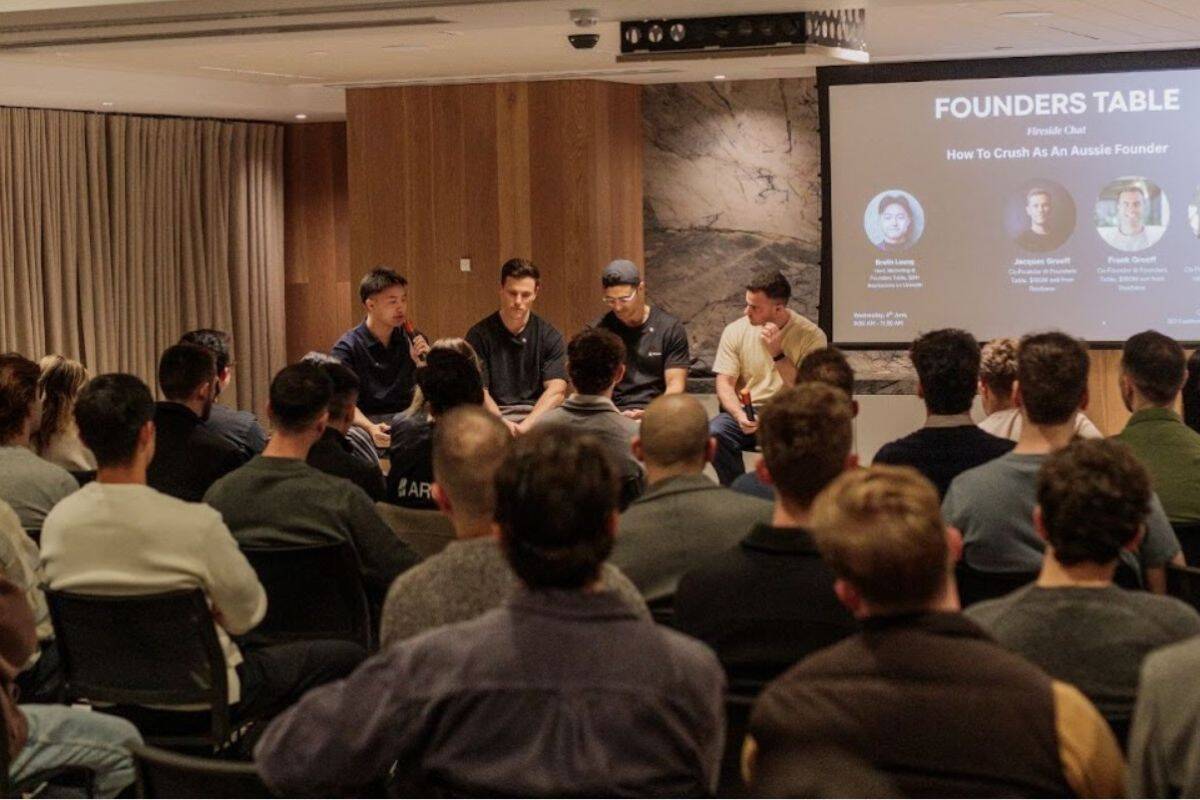
Frank and Jacques Greeff were sitting in yet another boardroom, surrounded by successful entrepreneurs who had paid thousands of dollars for the privilege of being there. The conversation was predictable—the same networking platitudes, the same carefully curated success stories, the same underlying tension that comes when business relationships are transactional rather than authentic.
They had just sold their property technology company, Realbase, for $180 million, and everyone in the room knew it. What they didn’t know was that the Greeff brothers were quietly plotting to blow up the entire model of how Australia’s most successful founders connect with each other.
What the Greeff brothers experienced encapsulates a fundamental problem with elite business communities worldwide: they have become commoditised experiences where access is determined by wallet size rather than actual value creation.
Greeff’s solution—the Founders Table—represents a radical departure from this model, one that could reshape how Australia’s entrepreneurial elite thinks about community building and knowledge sharing. They have proven their ability to build and scale a business to a significant exit and now have the credibility and resources to create something entirely new.
The Economics of Exclusivity
Traditional business communities like the Business Owners Alliance (BOA), CUB, and Entrepreneurs’ Organisation (EO) operate on a simple premise: charge significant membership fees to create exclusivity, then leverage that exclusivity to attract high-net-worth individuals who can afford the price of admission.
The model works, but it creates an artificial barrier that has nothing to do with the quality of insights or experiences a member might contribute. This observation strikes at the heart of why so many successful entrepreneurs find existing communities unsatisfying despite their hefty price tags.
Frank Greeff’s critique is sharp and personal. “Communities for business currently exist. However, they are run like a business or organisation. They are not driven or led by a previously exited founder. They cost money and, therefore, are all very similar in their style,” he explains.


How Founders’ Table Breaks the Norm
When traditional entrepreneur networks require a membership fee, The Founders’ Table creates a different kind of exclusivity—one based on demonstrated business success rather than the ability to pay membership dues. The approach suggests that when founder networking groups remove financial barriers, they can actually create more meaningful selection criteria.
The free model also eliminates a subtle but important psychological barrier. When entrepreneurs pay significant fees to join a community, there’s an implicit expectation of return on investment that can make interactions feel transactional. Remove the financial component, and conversations can focus purely on mutual value creation and authentic relationship building.
The Authenticity Advantage
The Greeff brothers’ background provides them with something most community organisers lack: street credibility earned through actual entrepreneurial success. Building Realbase from inception to a $180 million exit over ten years gives them a perspective that can’t be manufactured or purchased.
When the Greeff brothers speak about scaling challenges, fundraising struggles, or exit strategies, other founders listen because they have recently experienced these challenges successfully.
This authenticity extends beyond just business credentials.Many founders also explore unique ways to express their brand culture through everything from podcasts to custom patches — used for event branding, employee recognition, or promotional merchandise that resonates with their values.
Frank Greeff has demonstrated a commitment to using his success for broader impact, writing a cookbook called “Eat With Purpose” that raised $1 million for charity and launching the “Chew The Fat” podcast to interview prominent business figures. These initiatives suggest someone who understands that building a community requires genuine investment in relationships and shared value creation.
Success in the Long Game
What makes the Founders Table model particularly intriguing is its timing. Australia’s startup ecosystem has matured significantly over the past decade, producing a generation of entrepreneurs who have achieved substantial exits and are now looking for ways to give back while building their next ventures.
Greeff’s approach also reflects a broader trend in how successful entrepreneurs think about their next chapter. Rather than simply joining existing institutions, they’re creating new ones that reflect their values and experiences. Successful founders now have enough confidence and resources to build the infrastructure they wish had existed during their own journeys.
The strategy appears to be working. Founders Table has grown to 750+ members without any revenue model, suggesting strong organic demand for what the Greeff brothers are building.
The Greeff brothers’ ambition does not end with their current entrepreneurs on the waiting list. Their stated goal is audacious: to become one of the most well-known names in Australian business within five years while building Founders Table into the go-to community for every founder generating over $10 million in revenue.
This vision suggests someone who understands that community building, done right, can become a powerful platform for broader influence and impact. Jacques Greeff believes that if Founders Table succeeds in creating genuine value without charging fees, it could inspire similar initiatives globally and force existing organisations to reconsider their models. This will demonstrate that some of the most valuable networks are built on shared purpose rather than shared expenses.