• Advertise
  • About us
  • Terms and Conditions
  • Contact us
Saturday, December 6, 2025
Australian Times News
  • News
    • Weather
    • Sport
    • Technology
    • Business & Finance
      • Currency Zone
    • Lotto Results
      • The Lott
  • Lifestyle
    • Entertainment
    • Horoscopes
    • Health & Wellness
    • Recipes
  • Travel
  • Expat Life
  • Move to Australia
No Result
View All Result
  • News
    • Weather
    • Sport
    • Technology
    • Business & Finance
      • Currency Zone
    • Lotto Results
      • The Lott
  • Lifestyle
    • Entertainment
    • Horoscopes
    • Health & Wellness
    • Recipes
  • Travel
  • Expat Life
  • Move to Australia
No Result
View All Result
Australian Times News
No Result
View All Result
Home News

Nickel oxide is a material that can ‘learn’ like animals and could help further artificial intelligence research

Nickel oxide is interesting because when you expose it to hydrogen gas, its crystalline structure subtly changes and more electrons become available to generate an electrical current.

The Conversation by The Conversation
23-12-2021 06:07
in News
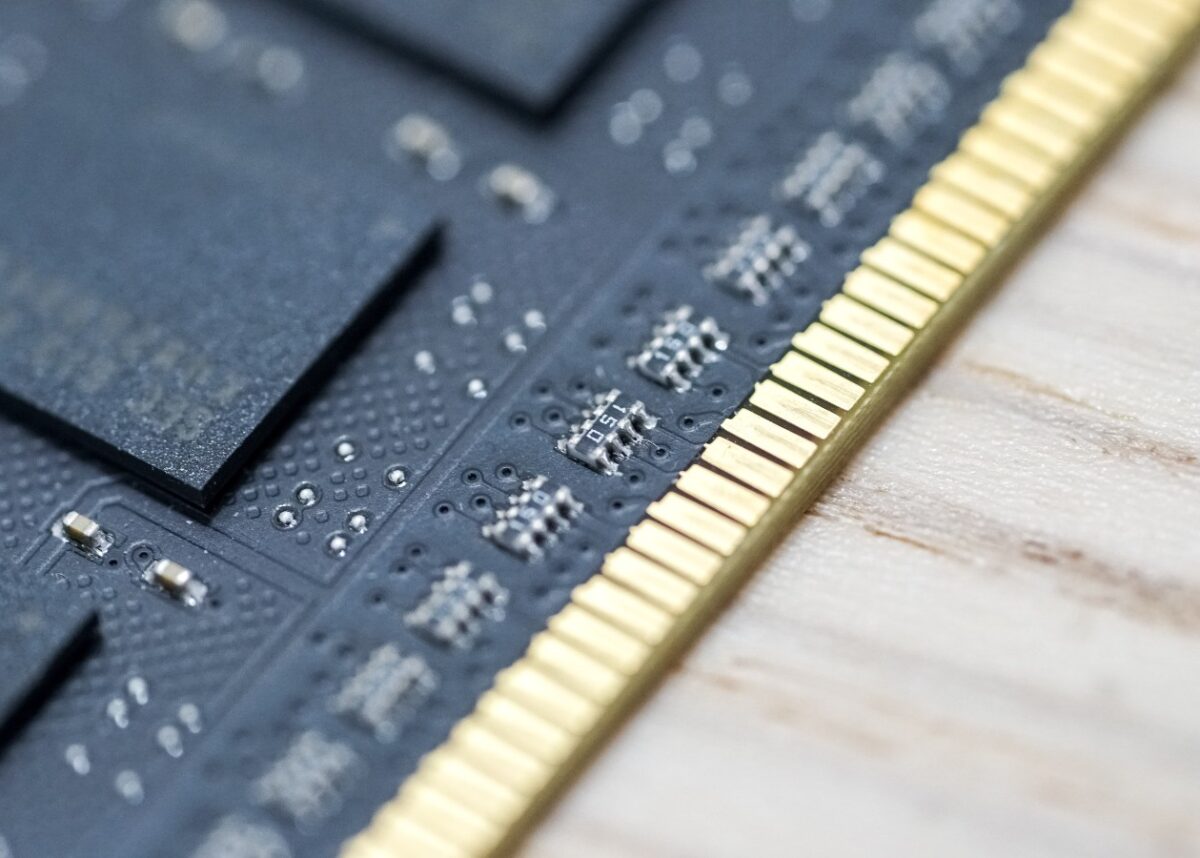
Photo by Jeremy Bezanger on Unsplash

Photo by Jeremy Bezanger on Unsplash

Shriram Ramanathan, Purdue University

The Research Brief is a short take about interesting academic work.

The big idea

A unique material, nickel oxide demonstrates the ability to learn things about its environment in a way that emulates the most basic learning abilities of animals, as my colleagues and I describe in a new paper.

For over half a century, neuroscientists have studied sea slugs to understand basic animal learning. Two fundamental concepts of learning are habituation and sensitization. Habituation occurs when an organism’s response to a repeated stimulus continuously decreases. When researchers first touch a sea slug, its gills retract. But the more they touch the slug, the less it retracts its gills. Sensitization is an organism’s extreme reaction to a harmful or unexpected stimulus. If researchers then shock a sea slug, it will retract its gills much more dramatically than when it was merely touched. This is sensitization.
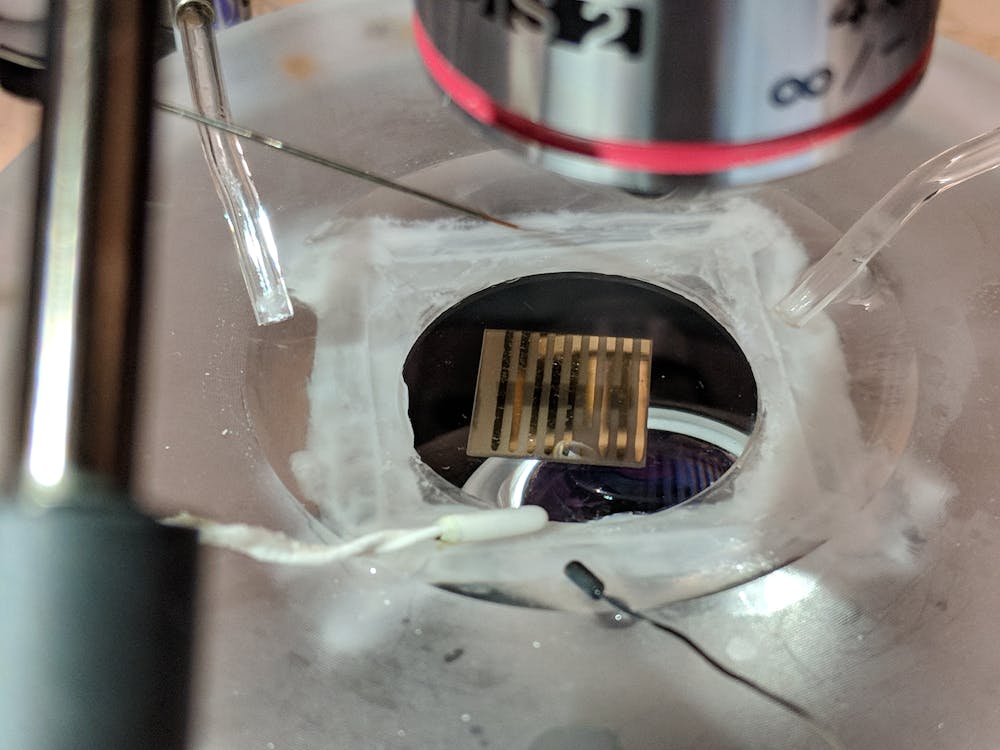
A small square of material inside a test chamber of metal with tubes.
When nickel oxide is alternately bathed in hydrogen gas and air, its behavior changes. Purdue University/Kayla Wiles, CC BY-ND

Nickel oxide has features that are strikingly similar to this learning behavior. Instead of gills retracting, we measured the change in electrical conductivity of the material. The stimulus, instead of a finger poke, was repeatedly alternating the environment of the nickel oxide between normal air and hydrogen gas.

Nickel oxide is interesting because when you expose it to hydrogen gas, its crystalline structure subtly changes and more electrons become available to generate an electrical current. In our experiment, we kept switching between the hydrogen-only and regular air environments. You would expect the electrical conductivity to oscillate up and down directly in relation to the exposure to hydrogen or air. But just as with the sea slugs, the change in conductivity of the nickel oxide slowly went down the more we stimulated it. It got habituated to the hydrogen.

When we exposed the material to bright light or ozone, though, it rapidly changed its conductivity – the same way a slug will always respond dramatically to a small shock.


AlsoRead...

Ryan: Building real freedom through e-commerce

Ryan: Building real freedom through e-commerce

27 November 2025
Design Australia Group: Redefining Drafting as the engine of housing growth

Design Australia Group: Redefining Drafting as the engine of housing growth

26 November 2025
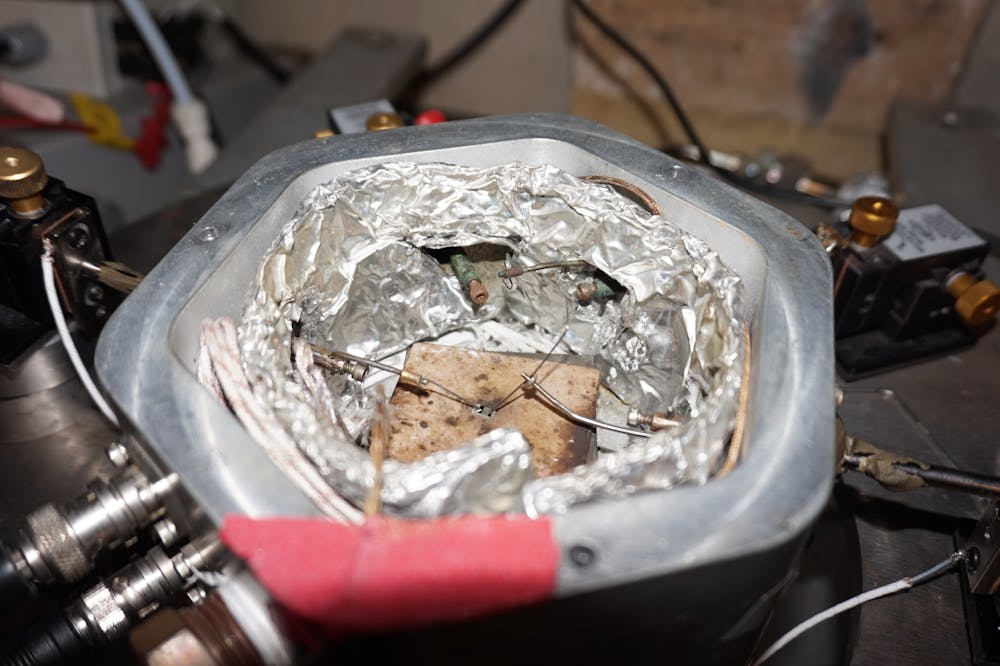
A small piece of material underneath a large piece of scientific equipment.
The conductivity of nickel oxide stores information similarly to the way slugs learn. Purdue University/Kayla Wiles, CC BY-ND

Why it matters

The ability to learn, remember or forget information as needed is a powerful skill for any animal or machine. So far, the vast majority of research in the field of artificial intelligence has focused on software-based approaches to machine learning, with far less effort dedicated to studying the learning abilities of materials.

At the center of these two related areas of research lies the field of brain-inspired computers. For intelligence to be encoded into hardware, scientists need semiconductors that can learn from past experience and adapt to dynamic environments in a physical way similar to that of neurons in animal brains. Our new research showing how nickel oxide demonstrates features of learning hints at how this or similar materials could serve as building blocks for computers of the future.

What still isn’t known

Before such materials can be incorporated into computer chips there are some knowledge gaps that need to be addressed. For instance, it is not yet clear at what time scales a material needs to learn for it to be useful in electrical systems. How quickly does something need to learn or forget to be useful? Another unknown is how or whether it is possible to change the structure of nickel oxide to produce different learning behaviors.
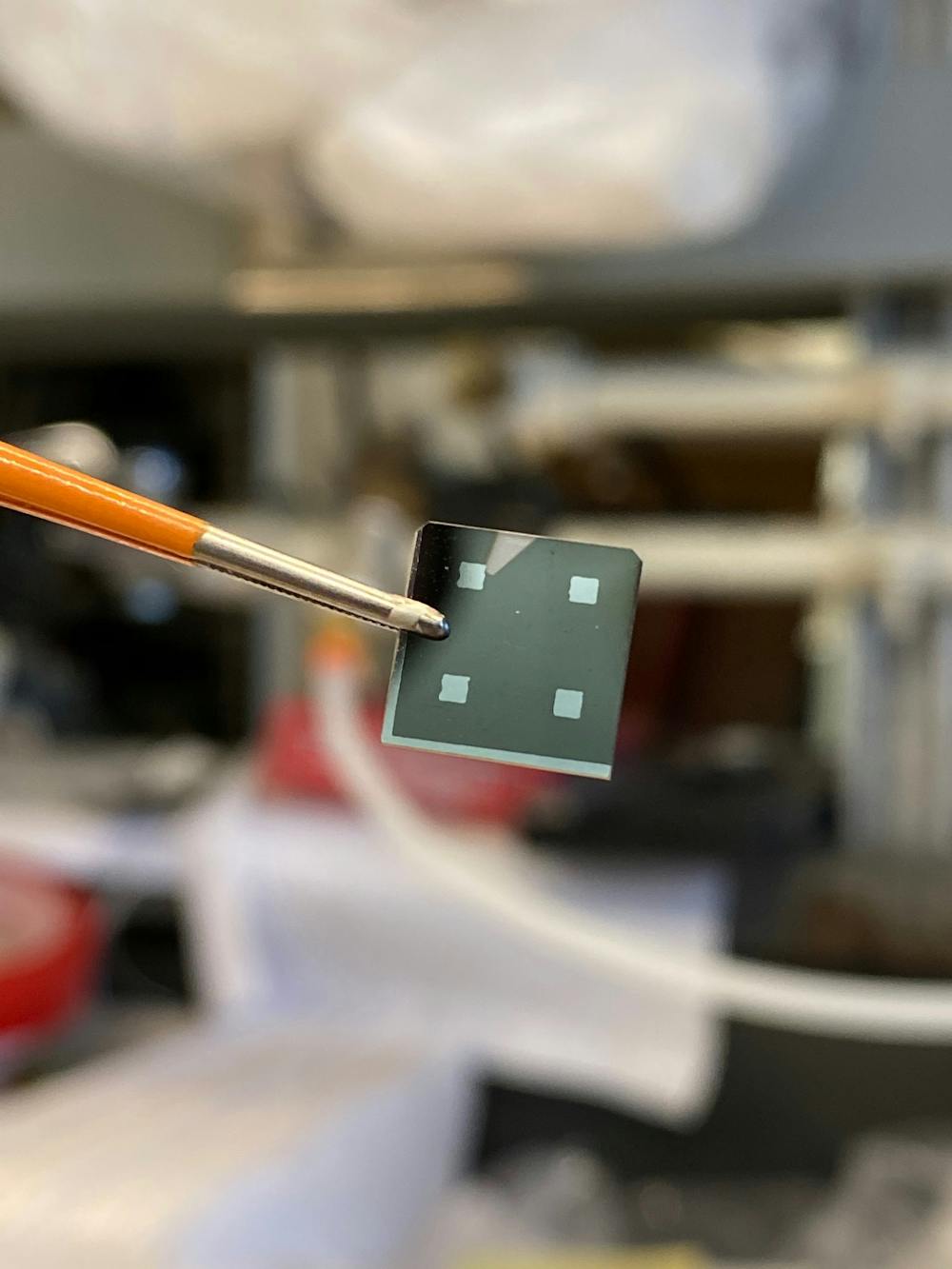
A small square of gray material with stripes.
It is unclear whether nickel oxide itself can be used for computing, but the concepts at play could inspire further innovation. Purdue University/Erin Easterling, CC BY-ND

What’s next

In addition to further experiments on the material itself, there are theoretical lessons to explore. Observations of collective behavior of animals in nature – such as bird flocks and schools of fish – have inspired researchers to develop fields of AI like swarm intelligence. In a similar fashion, the interesting collective motion of atoms and electrons in materials could inspire AI and hardware design in the future.

As new materials that can accommodate mobile atoms are discovered, I am optimistic we will see further breakthroughs that can bring researchers one step closer to designing computers that emulate animal brains.

Shriram Ramanathan, Professor of Materials Engineering, Purdue University

This article is republished from The Conversation under a Creative Commons license. Read the original article.


Tags: SB001
DMCA.com Protection Status

SUBSCRIBE to our NEWSLETTER

[mc4wp_form id=”2384248″]

Don't Miss

The evolution of Aesthetic Surgery through the lens of Dr Kourosh Tavakoli

by Pauline Torongo
4 December 2025
The evolution of Aesthetic Surgery through the lens of Dr. Kourosh Tavakoli
Health & Wellness

As global interest in Australian cosmetic surgery continues to grow, the combination of regulation, research and emerging digital tools is...

Read moreDetails

Ryan: Building real freedom through e-commerce

by Pauline Torongo
27 November 2025
Ryan: Building real freedom through e-commerce
Business & Finance

Ryan’s greatest achievement isn’t any single business or revenue milestone — it’s the ecosystem he’s built through the Change community.

Read moreDetails

Design Australia Group: Redefining Drafting as the engine of housing growth

by Pauline Torongo
26 November 2025
Design Australia Group: Redefining Drafting as the engine of housing growth
Business & Finance

Australia is under pressure to build homes faster, but design bottlenecks slow progress. Design Australia Group is fixing this by...

Read moreDetails

Louis Guy Detata builds Global Trading Empires through autonomous systems and disciplined leadership

by Pauline Torongo
25 November 2025
Louis Guy Detata builds Global Trading Empires through autonomous systems and disciplined leadership
Business & Finance

The path from investment banking to leading a global trading platform has taught Louis Detata that sustainable success requires more...

Read moreDetails

Burning Eucalyptus Wood: Tips, Advantages, Disadvantages & Alternatives

by Fazila Olla-Logday
20 November 2025
Image Supplied
Enviroment

Learn about burning eucalyptus wood for stoves and fireplaces. Discover benefits, drawbacks, harvesting tips, and better alternative firewood options for...

Read moreDetails

Everything Parents Need to Know About Baby Soft Play and Why It’s a Game Changer

by Fazila Olla-Logday
11 November 2025
Everything Parents Need to Know About Baby Soft Play
Health & Wellness

Baby soft play is a fun, safe, and educational way for little ones to explore and grow. Discover the benefits...

Read moreDetails

WOMAD Sets Up a New Camp in Wiltshire – Australian festival fans take note!

by Kris Griffiths
11 November 2025
Kumbia Boruka brought their reggae and dancehall flavour to the Taste the World Stage at WOMAD 2024 - Credit - Mike Massaro
Entertainment

With its 2026 edition moving to Neston Park in England, WOMAD offers Aussie music lovers a chance to reconnect with global...

Read moreDetails
Load More

Copyright © Blue Sky Publications Ltd. All Rights Reserved.
australiantimes.co.uk is a division of Blue Sky Publications Ltd. Reproduction without permission prohibited. DMCA.com Protection Status

  • About us
  • Write for Us
  • Advertise
  • Contact us
  • T&Cs, Privacy and GDPR
No Result
View All Result
  • News
    • Weather
    • Sport
    • Technology
    • Business & Finance
      • Currency Zone
    • Lotto Results
      • The Lott
  • Lifestyle
    • Entertainment
    • Horoscopes
    • Health & Wellness
    • Recipes
  • Travel
  • Expat Life
  • Move to Australia

Copyright © Blue Sky Publications Ltd. All Rights Reserved.
australiantimes.co.uk is a division of Blue Sky Publications Ltd. Reproduction without permission prohibited. DMCA.com Protection Status

No Result
View All Result
  • News
    • Weather
    • Sport
    • Technology
    • Business & Finance
      • Currency Zone
    • Lotto Results
      • The Lott
  • Lifestyle
    • Entertainment
    • Horoscopes
    • Health & Wellness
    • Recipes
  • Travel
  • Expat Life
  • Move to Australia

Copyright © Blue Sky Publications Ltd. All Rights Reserved.
australiantimes.co.uk is a division of Blue Sky Publications Ltd. Reproduction without permission prohibited. DMCA.com Protection Status