

• Advertise
  • About us
  • Terms and Conditions
  • Contact us
Saturday, December 6, 2025
Australian Times News
  • News
    • Weather
    • Sport
    • Technology
    • Business & Finance
      • Currency Zone
    • Lotto Results
      • The Lott
  • Lifestyle
    • Entertainment
    • Horoscopes
    • Health & Wellness
    • Recipes
  • Travel
  • Expat Life
  • Move to Australia
No Result
View All Result
  • News
    • Weather
    • Sport
    • Technology
    • Business & Finance
      • Currency Zone
    • Lotto Results
      • The Lott
  • Lifestyle
    • Entertainment
    • Horoscopes
    • Health & Wellness
    • Recipes
  • Travel
  • Expat Life
  • Move to Australia
No Result
View All Result
Australian Times News
No Result
View All Result
Home News

Humans are driving animals and plants to the edge. But are we really heading into a mass extinction?

It is now common to refer to the current biodiversity crisis as the sixth mass extinction. But is this true? Are we in the middle of an event on the same scale as the five ancient mass extinctions Earth has experienced?

The Conversation by The Conversation
16-10-2021 06:17
in News
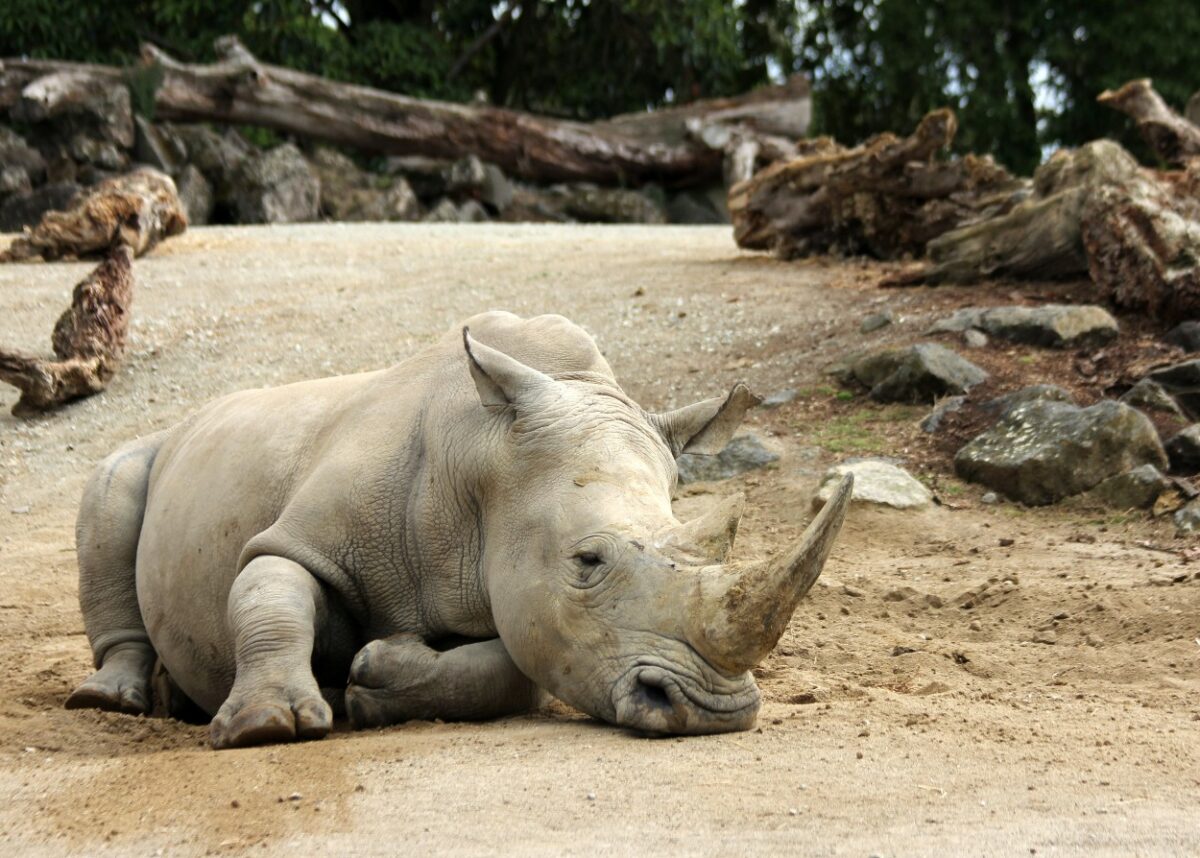
Photo by Sandy Millar on Unsplash

Photo by Sandy Millar on Unsplash

Michael Hannah, Te Herenga Waka — Victoria University of Wellington

It is now common to refer to the current biodiversity crisis as the sixth mass extinction. But is this true? Are we in the middle of an event on the same scale as the five ancient mass extinctions Earth has experienced?

Humans are indeed driving animals and plants to extinction. Land clearance, habitat modification and, above all, climate change are all placing biodiversity under stress.

Many species have died out since the arrival of humans and many more are threatened.

But to answer this question fully, we have to look at the rates at which species were going extinct before the appearance of humans and compare it to today’s rate.

Life on Earth has diversified from a single cell more than 3.7 billion years ago to the estimated 8.7 million species alive today.

But as I describe in my book Extinctions: living and dying in the margin of error, this journey has been a roller coaster ride. There have been times when biodiversity exploded with many new species evolving relatively quickly. Conversely, there have been extremely short intervals of time when biodiversity crashed in a mass extinction.


AlsoRead...

Ryan: Building real freedom through e-commerce

Ryan: Building real freedom through e-commerce

27 November 2025
Design Australia Group: Redefining Drafting as the engine of housing growth

Design Australia Group: Redefining Drafting as the engine of housing growth

26 November 2025

The scale of biodiversity loss in a mass extinction is extraordinary. In the five mass extinctions on Earth, estimates of species loss range from around 70% at the end of the Cretaceous up to 95% at the end of the Permian, the largest of the mass extinctions.
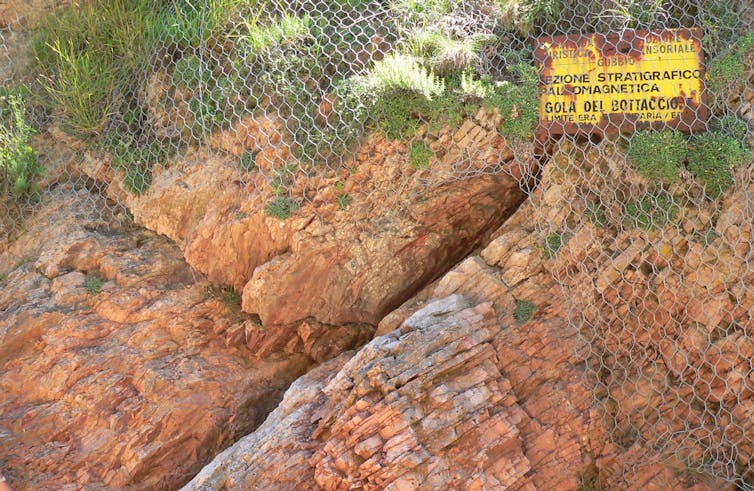
The Gubbio section, found in Italy, represents a complete record of the end-of-Cretaceous mass extinction.
The Gubbio section, found in Italy, represents a complete record of the end-of-Cretaceous mass extinction. The exact instant when about 70% of species went extinct is marked by the cleft running diagonally across the image. Author provided

Each of these events resulted in a wave of extinctions washing across all of the planet’s ecosystems. Reefs were wiped out, dinosaurs disappeared, insect species were decimated and plants went through massive upheavals. It took up to a million years for ecosystems to recover from a mass extinction.


Ancient and modern extinction rates

Estimating prehuman extinction rates from the somewhat patchy fossil record is fraught. Nevertheless, researchers have managed do it, albeit using only vertebrate fossils.

Their estimate suggests prior to the arrival of humans, vertebrate species were going extinct at the rate of about two per million species lost every year.

In 2015, another research team took this estimate and compared it with present day vertebrate extinction rates. They found vertebrates are going extinct 53 times faster today than they were before humans arrived.

If the increase in extinction rates recorded in vertebrates is on a similar scale across the planet’s entire biota, humans have triggered a significant rise in the rate of species going extinct.

But is that enough to consider our current biotic crisis a mass extinction?
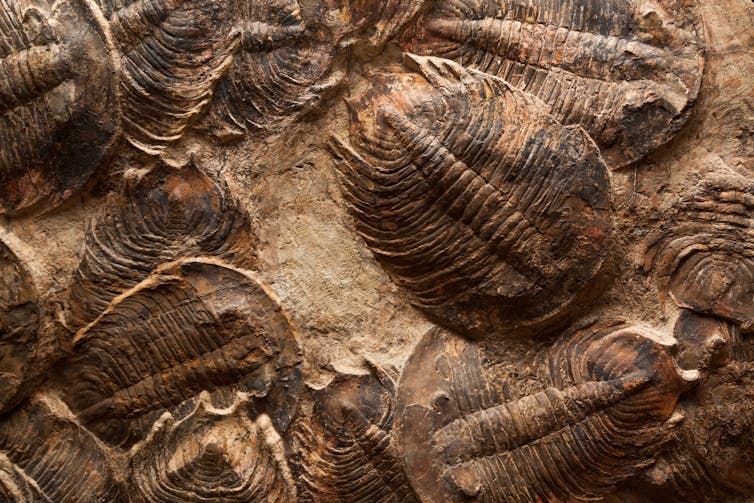
Trilobites once filled the world's oceans but died out at the end of the Permian.
Trilobites were ancient arthropods that filled the world’s oceans from the early Cambrian, some 520 million years ago, until the mass extinction at the end of the Permian, 252 million years ago. Shutterstock/Tami Freed

To answer that question, we need to consult the Red List run by the International Union for the Conservation of Nature (ICUN). This list is an attempt to assess the threat of extinction of all known species by assigning each to a category of descending threat: extinct or extinct in the wild, severe threat of extinction, threatened and so on.

Are we there yet?

A glance across the Red List confirms that, as with the ancient mass extinctions, today’s species loss affects the entire biosphere. However, the situation changes when we compare the current level of extinction with those from the big five mass extinctions.
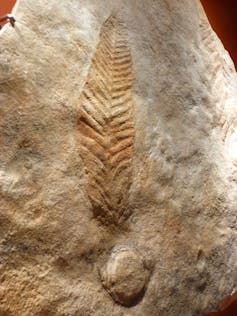
A fossil of a plant that went extinct 550 million years ago.
This fossil (Arborea arborea) is part of the Ediacaran fauna from South Australia which went extinct about 550 million years ago. Author provided

As noted above, the loss of species during the ancient mass extinctions is massive. Data from the Red List suggest we haven’t come close to those. For example, the Red List assigns only 1.46% of mammal species to the extinct or extinct in the wild categories. It considers less than 1% of amphibian species are extinct or extinct in the wild. For insects, it’s 0.65%, bivalves 4% and corals 0%. This level of species loss isn’t close to the losses recorded in the fossil record.

While the rate at which species are going extinct has risen and the entire ecosystem is affected, we have, at the moment at least, only low levels of extinction.

Unfortunately, species extinction levels show only part of the problem. To see the full extent of the crisis, we need to add the species the Red List considers to be under threat of extinction to those already extinct.

When we do, the picture changes. Taken together, the percentage of mammals that are extinct or under threat of extinction rises from 1.46% to 23.48%, amphibian numbers rise to 33.56%, insects to 19.23% and corals to 26.85%. These numbers demonstrate the true scale of the threat facing the planet’s biosphere.


I don’t like referring to today’s crisis as a mass extinction because it allows us to focus entirely on extinction levels, and they are low. Others have coined a new term to reflect the fact that although many species are extinct, there are many more threatened with extinction: defaunation.

Defaunation better describes the crisis unfolding in the planet’s biosphere. To avoid a slide into a full-blown mass extinction, we must not allow defaunation to continue. We know how to do this: reduce emissions, protect vulnerable ecosystems and regenerate degraded ones.

Michael Hannah, Associate Professor, Te Herenga Waka — Victoria University of Wellington

This article is republished from The Conversation under a Creative Commons license. Read the original article.


Tags: SB001
DMCA.com Protection Status

SUBSCRIBE to our NEWSLETTER

[mc4wp_form id=”2384248″]

Don't Miss

The evolution of Aesthetic Surgery through the lens of Dr Kourosh Tavakoli

by Pauline Torongo
4 December 2025
The evolution of Aesthetic Surgery through the lens of Dr. Kourosh Tavakoli
Health & Wellness

As global interest in Australian cosmetic surgery continues to grow, the combination of regulation, research and emerging digital tools is...

Read moreDetails

Ryan: Building real freedom through e-commerce

by Pauline Torongo
27 November 2025
Ryan: Building real freedom through e-commerce
Business & Finance

Ryan’s greatest achievement isn’t any single business or revenue milestone — it’s the ecosystem he’s built through the Change community.

Read moreDetails

Design Australia Group: Redefining Drafting as the engine of housing growth

by Pauline Torongo
26 November 2025
Design Australia Group: Redefining Drafting as the engine of housing growth
Business & Finance

Australia is under pressure to build homes faster, but design bottlenecks slow progress. Design Australia Group is fixing this by...

Read moreDetails

Louis Guy Detata builds Global Trading Empires through autonomous systems and disciplined leadership

by Pauline Torongo
25 November 2025
Louis Guy Detata builds Global Trading Empires through autonomous systems and disciplined leadership
Business & Finance

The path from investment banking to leading a global trading platform has taught Louis Detata that sustainable success requires more...

Read moreDetails

Burning Eucalyptus Wood: Tips, Advantages, Disadvantages & Alternatives

by Fazila Olla-Logday
20 November 2025
Image Supplied
Enviroment

Learn about burning eucalyptus wood for stoves and fireplaces. Discover benefits, drawbacks, harvesting tips, and better alternative firewood options for...

Read moreDetails

Everything Parents Need to Know About Baby Soft Play and Why It’s a Game Changer

by Fazila Olla-Logday
11 November 2025
Everything Parents Need to Know About Baby Soft Play
Health & Wellness

Baby soft play is a fun, safe, and educational way for little ones to explore and grow. Discover the benefits...

Read moreDetails

WOMAD Sets Up a New Camp in Wiltshire – Australian festival fans take note!

by Kris Griffiths
11 November 2025
Kumbia Boruka brought their reggae and dancehall flavour to the Taste the World Stage at WOMAD 2024 - Credit - Mike Massaro
Entertainment

With its 2026 edition moving to Neston Park in England, WOMAD offers Aussie music lovers a chance to reconnect with global...

Read moreDetails
Load More

Copyright © Blue Sky Publications Ltd. All Rights Reserved.
australiantimes.co.uk is a division of Blue Sky Publications Ltd. Reproduction without permission prohibited. DMCA.com Protection Status

  • About us
  • Write for Us
  • Advertise
  • Contact us
  • T&Cs, Privacy and GDPR
No Result
View All Result
  • News
    • Weather
    • Sport
    • Technology
    • Business & Finance
      • Currency Zone
    • Lotto Results
      • The Lott
  • Lifestyle
    • Entertainment
    • Horoscopes
    • Health & Wellness
    • Recipes
  • Travel
  • Expat Life
  • Move to Australia

Copyright © Blue Sky Publications Ltd. All Rights Reserved.
australiantimes.co.uk is a division of Blue Sky Publications Ltd. Reproduction without permission prohibited. DMCA.com Protection Status

No Result
View All Result
  • News
    • Weather
    • Sport
    • Technology
    • Business & Finance
      • Currency Zone
    • Lotto Results
      • The Lott
  • Lifestyle
    • Entertainment
    • Horoscopes
    • Health & Wellness
    • Recipes
  • Travel
  • Expat Life
  • Move to Australia

Copyright © Blue Sky Publications Ltd. All Rights Reserved.
australiantimes.co.uk is a division of Blue Sky Publications Ltd. Reproduction without permission prohibited. DMCA.com Protection Status





