


Jeff Prince, Indiana University and Daniel Simon, Indiana University
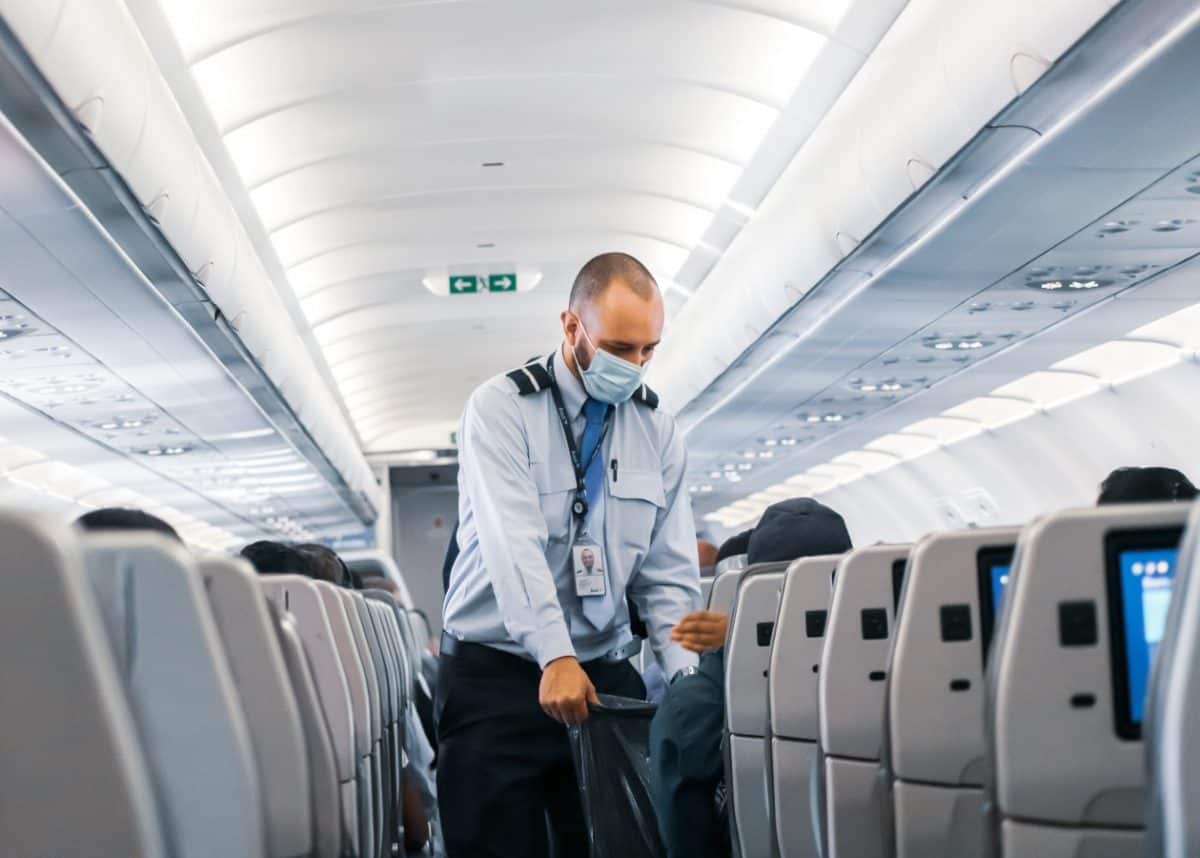
Fear of flying and catching COVID-19 led to a massive decline in air travel in 2020. But an interesting question emerges: How much did air travel contribute to the early, and uneven, spread of COVID-19 in the U.S.?
In a previous study currently undergoing peer review, we looked at the effect of air travel from Italy and China on the early spread of COVID-19 in the U.S. and found while flights from Italy were an important source of exposure, ones from China were not.
Experts have offered many explanations for why the virus spread so unevenly in the U.S. and elsewhere, ranging from population density to public transportation.
We are economics researchers with experience studying air travel. In a recent study that is beginning the peer review process, we examine whether air travel from early COVID-19 hot spots in the U.S. spread the virus to other parts of the country. The answer is no.
Ready for takeoff?
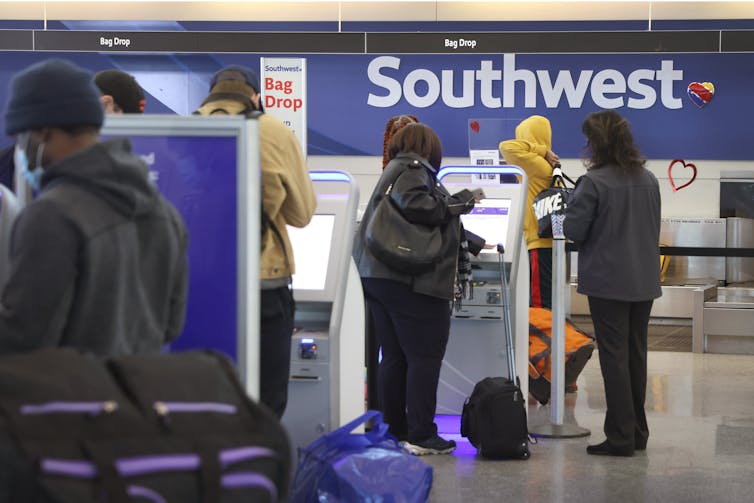
The question has recently taken on added importance. With the pace of vaccinations increasing and COVID-19 cases falling, air travel is increasing. Nearly 15% more travelers flew in February than in January.
At the same time, the latest guidelines from the Centers for Disease Control and Prevention, updated March 23, 2021, still recommend to delay air travel. This includes those who are vaccinated. The recommendation may be based on the fact that case numbers increase after mass travel, but it is not clear if this relationship is due to air travel per se.


To examine whether passengers from COVID-19 hot spots spread the virus to other parts of the U.S., we studied whether counties receiving more passengers from COVID-19 hot spots during the first quarter of 2020 experienced higher COVID-19 infection and death rates during the first wave of the pandemic than counties receiving fewer passengers from COVID-19 hot spots. For our purposes, we determined the first wave ended around May 31, 2020.
Our results show that passengers traveling from COVID-19 hot spots at the onset of the pandemic did not spread the virus across the country during the first wave of the pandemic. These results suggest to us that requiring negative COVID-19 tests for airline passengers may not be necessary. Indeed, they may be harmful, if they cause people to drive more.
Prior research that one of us conducted showed that after 9/11, increased airport security procedures reduced the demand for air travel. The inconvenience from the additional security, combined with a fear of another terrorist attack on a plane, led many travelers to substitute driving for flying, which resulted in an increase in driving fatalities.
In addition, our results suggest that banning domestic air travel may not help to slow the spread of infections.
Connecting flights to COVID-19?
In our study, we link data on airline travel with county-level data on COVID-19 cases and deaths. We wanted to find out: Did counties with more arrivals from early COVID-19 hot spots – New York City, Boston, New Orleans and Detroit – experience more COVID-19 cases or deaths during the first wave of the pandemic?
There are two important challenges in trying to assess the relationship between airline travel and the spread of COVID-19. The first is something called reverse causality: The number of travelers to any area in the U.S. will likely be influenced by the number of confirmed cases and deaths in that metro area. Not many people want to travel to a location experiencing a COVID-19 outbreak.
The second concern is that areas that are generally more attractive to travelers may tend to have more COVID-19 cases and deaths, in addition to arrivals. For example, it may be that cities with more business activity or tourist attractions may both have more COVID-19 cases and attract more travelers.
We used data on passengers arriving from non-COVID-19 hot spots to help control for these factors. We also took into account other factors that can affect the virus’s spread and impact, such as population size and density, and demographics of the local area.
We were surprised to find no evidence that air travel from early COVID-19 hot spots helped to spread the virus across the U.S. Specifically, after controlling for arrivals from non-COVID-19 hot spots, we found no evidence that counties that received more passengers from the four COVID-19 hot spots during the first quarter of 2020 experienced more cases or deaths during the first wave of the pandemic, through May 31, 2020. In fact, we found some evidence that these counties actually experienced fewer cases and deaths.
At the same time, we find evidence that counties that received more passengers from areas with very low COVID-19 infection rates at the onset of the pandemic, including Atlanta, Charlotte, Cincinnati, Dallas, Denver, Houston, Minneapolis-St. Paul and Phoenix, experienced more cases and deaths, although not by very much.
What this means for flyers
Based on our findings, we think that requiring all airline passengers to provide proof of a negative COVID-19 test will do very little to slow the spread of the virus. That is based on our results, along with data showing that the odds of getting infected while flying are very small.
Moreover, because of the much higher risk of dying in an auto accident, driving is much more dangerous than flying. Therefore, a policy that makes flying more difficult could lead to additional driving fatalities if travelers choose to drive rather than fly.
[Get facts about coronavirus and the latest research. Sign up for The Conversation’s newsletter.]
Jeff Prince, Professor and Chair of Business Economics and Public Policy, Indiana University and Daniel Simon, Associate Professor of Public Affairs, Indiana University
This article is republished from The Conversation under a Creative Commons license. Read the original article.







