• Advertise
  • About us
  • Terms and Conditions
  • Contact us
Friday, December 5, 2025
Australian Times News
  • News
    • Weather
    • Sport
    • Technology
    • Business & Finance
      • Currency Zone
    • Lotto Results
      • The Lott
  • Lifestyle
    • Entertainment
    • Horoscopes
    • Health & Wellness
    • Recipes
  • Travel
  • Expat Life
  • Move to Australia
No Result
View All Result
  • News
    • Weather
    • Sport
    • Technology
    • Business & Finance
      • Currency Zone
    • Lotto Results
      • The Lott
  • Lifestyle
    • Entertainment
    • Horoscopes
    • Health & Wellness
    • Recipes
  • Travel
  • Expat Life
  • Move to Australia
No Result
View All Result
Australian Times News
No Result
View All Result
Home Technology

Why are scientists trying to manufacture organs in space?

Gravity influences cellular behavior by impacting how protein and genes interact inside the cells, creating tissue that is polarized, a fundamental step for natural organ development.

The Conversation by The Conversation
12-07-2020 22:23
in Technology
Why are scientists trying to manufacture organs in space

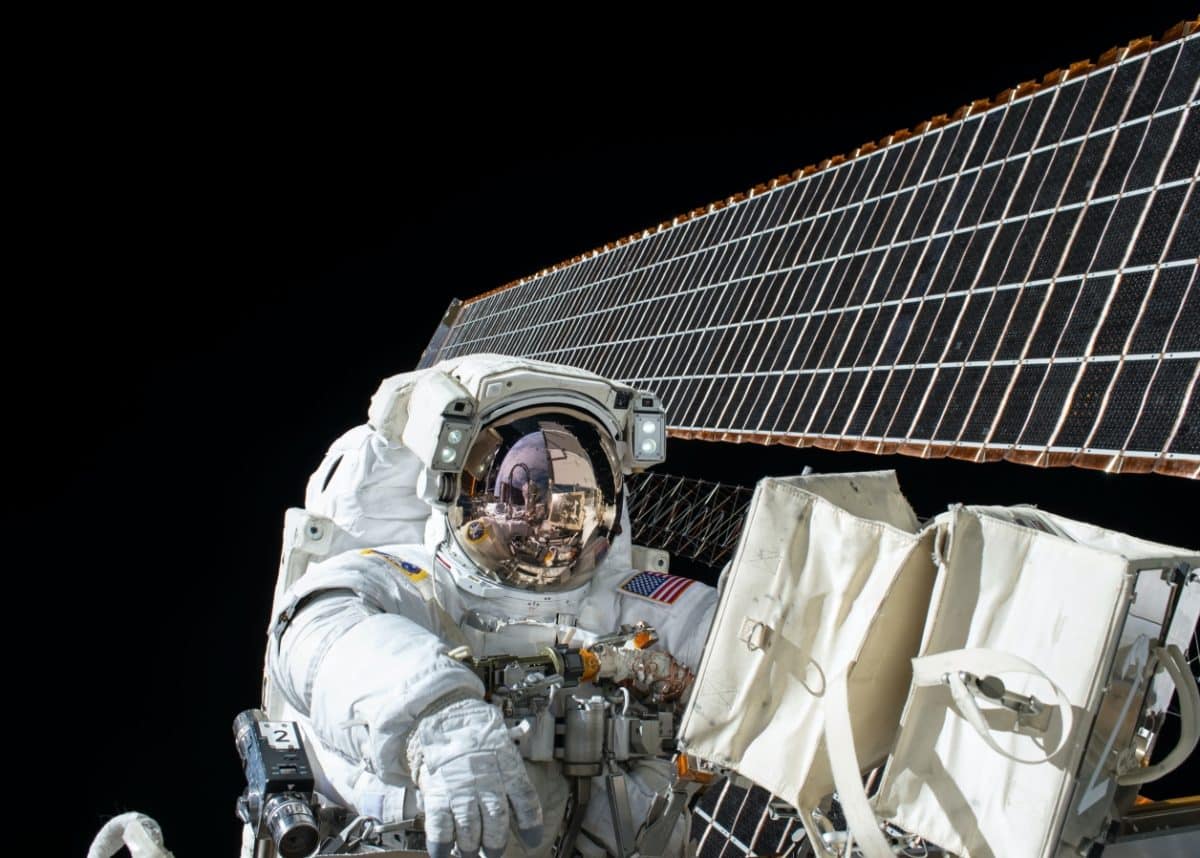
Why are scientists trying to manufacture organs in space Photo by NASA on Unsplash

Alysson R. Muotri, University of California San Diego

Gravity can be a real downer when you are trying to grow organs.
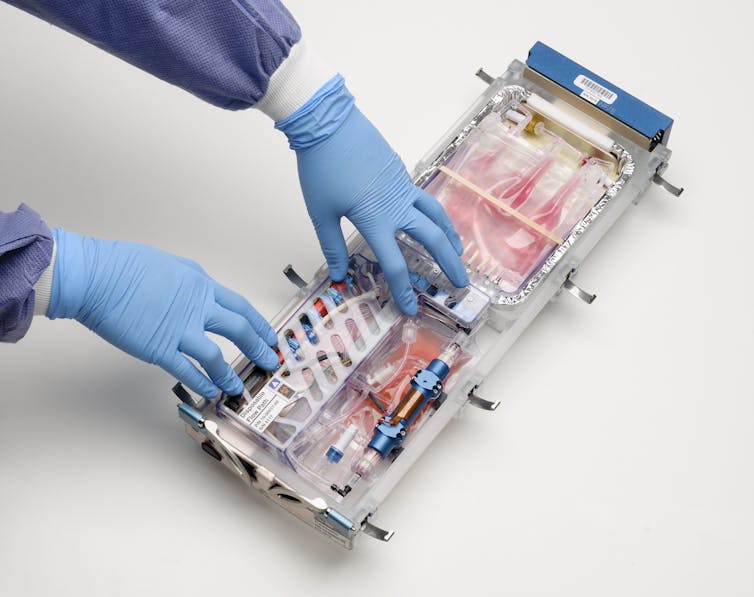
This Bioculture System will let biologists learn about how space impacts human health by studying cells grown in the microgravity environment of the International Space Station. NASA/Ames Research Center/Dominic Hart

That’s why experiments in space are so valuable. They have revealed a new perspective into biological sciences, including insights into making human tissues.

Gravity influences cellular behavior by impacting how protein and genes interact inside the cells, creating tissue that is polarized, a fundamental step for natural organ development. Unfortunately, gravity is against us when we try to reproduce complex three dimensional tissues in the lab for medical transplantation. This is difficult because of the intrinsic limitations of bio-reactors used on Earth.

I am a stem cell biologist and interested on brain health and evolution. My lab studies how the human brain is formed inside the womb and how alterations in this process might have lifelong consequences to human behavior, such as in autism or schizophrenia. Part of that work includes growing brain cells in space.

Growing tissue and organs in the lab

To build organized tissues in the lab, scientists use scaffolds to provide a surface for cells to attach based on a predetermined rigid shape. For example, an artificial kidney needs a structure, or scaffold, of a certain shape for kidney cells to grow on. Indeed, this strategy helps the tissue to organize in the early stages but creates problems in the long run, such as eventual immune reactions to these synthetic scaffolds or inaccurate structures.

[Deep knowledge, daily. Sign up for The Conversation’s newsletter.]

AlsoRead...

Common Mistakes When Buying a Telescope

Common Mistakes When Buying a Telescope — And How to Avoid Them

1 July 2025
Leading with Trust: Why Quality still wins in the AI Era

Leading with Trust: Why Quality still wins in the AI Era

5 June 2025

By contrast, in weightless conditions, cells can freely self-organize into their correct three-dimensional structure without the need for a scaffold substrate. By removing gravity from the equation, we researchers might learn new ways of building human tissues, such as cartilage and blood vessels that are scaffold-free, mimicking their natural cellular arrangement in an artificial setting. While this is not exactly what happens in the womb (after all the womb is also subject to gravity), weightless conditions does give us an advantage.

And this is precisely what is happening at the International Space Station.

These experiments help researchers optimize tissue growth for use in basic science, personalized medicine and organ transplantation.

But there are other reasons why we should manufacture organs in space. Long-term space missions create a series of physiological alterations in the body of astronauts. While some of these alterations are reversible with time, others are not, compromising future human spaceflights.

Studying astronauts’ bodies before and after their mission can reveal what goes wrong on their organs, but provides little insights on the mechanisms responsible for the observed alterations. Thus, growing human tissues in space can complement this type of investigation and reveal ways to counteract it.

Finally, all forms of life that we know about have evolved in the presence of microgravity. Without gravity, our brains might have evolved in a different trajectory, or our livers might not filter liquids as it does on Earth.

By recreating embryonic organ formation in space, we can anticipate how the human body in the womb would develop. There are several research initiatives going on in my lab with human brain organoids at ISS, designed to learn the impact of zero gravity on the developing human brain. These projects will have profound implications for future human colonization (can humans successfully reproduce in space?). These studies will also improve the generation of artificial organs that are used for testing drugs and treatments on Earth. Will better treatments for neurodevelopmental and neurodegenerative conditions that affects millions of people come from research in space?

Alysson R. Muotri, Professor of Pediatrics and Cellular and Molecular Medicine, University of California San Diego

This article is republished from The Conversation under a Creative Commons license. Read the original article.


Tags: SB001
DMCA.com Protection Status

SUBSCRIBE to our NEWSLETTER

[mc4wp_form id=”2384248″]

Don't Miss

The evolution of Aesthetic Surgery through the lens of Dr Kourosh Tavakoli

by Pauline Torongo
4 December 2025
The evolution of Aesthetic Surgery through the lens of Dr. Kourosh Tavakoli
Health & Wellness

As global interest in Australian cosmetic surgery continues to grow, the combination of regulation, research and emerging digital tools is...

Read moreDetails

Ryan: Building real freedom through e-commerce

by Pauline Torongo
27 November 2025
Ryan: Building real freedom through e-commerce
Business & Finance

Ryan’s greatest achievement isn’t any single business or revenue milestone — it’s the ecosystem he’s built through the Change community.

Read moreDetails

Design Australia Group: Redefining Drafting as the engine of housing growth

by Pauline Torongo
26 November 2025
Design Australia Group: Redefining Drafting as the engine of housing growth
Business & Finance

Australia is under pressure to build homes faster, but design bottlenecks slow progress. Design Australia Group is fixing this by...

Read moreDetails

Louis Guy Detata builds Global Trading Empires through autonomous systems and disciplined leadership

by Pauline Torongo
25 November 2025
Louis Guy Detata builds Global Trading Empires through autonomous systems and disciplined leadership
Business & Finance

The path from investment banking to leading a global trading platform has taught Louis Detata that sustainable success requires more...

Read moreDetails

Burning Eucalyptus Wood: Tips, Advantages, Disadvantages & Alternatives

by Fazila Olla-Logday
20 November 2025
Image Supplied
Enviroment

Learn about burning eucalyptus wood for stoves and fireplaces. Discover benefits, drawbacks, harvesting tips, and better alternative firewood options for...

Read moreDetails

Everything Parents Need to Know About Baby Soft Play and Why It’s a Game Changer

by Fazila Olla-Logday
11 November 2025
Everything Parents Need to Know About Baby Soft Play
Health & Wellness

Baby soft play is a fun, safe, and educational way for little ones to explore and grow. Discover the benefits...

Read moreDetails

WOMAD Sets Up a New Camp in Wiltshire – Australian festival fans take note!

by Kris Griffiths
11 November 2025
Kumbia Boruka brought their reggae and dancehall flavour to the Taste the World Stage at WOMAD 2024 - Credit - Mike Massaro
Entertainment

With its 2026 edition moving to Neston Park in England, WOMAD offers Aussie music lovers a chance to reconnect with global...

Read moreDetails
Load More

Copyright © Blue Sky Publications Ltd. All Rights Reserved.
australiantimes.co.uk is a division of Blue Sky Publications Ltd. Reproduction without permission prohibited. DMCA.com Protection Status

  • About us
  • Write for Us
  • Advertise
  • Contact us
  • T&Cs, Privacy and GDPR
No Result
View All Result
  • News
    • Weather
    • Sport
    • Technology
    • Business & Finance
      • Currency Zone
    • Lotto Results
      • The Lott
  • Lifestyle
    • Entertainment
    • Horoscopes
    • Health & Wellness
    • Recipes
  • Travel
  • Expat Life
  • Move to Australia

Copyright © Blue Sky Publications Ltd. All Rights Reserved.
australiantimes.co.uk is a division of Blue Sky Publications Ltd. Reproduction without permission prohibited. DMCA.com Protection Status

No Result
View All Result
  • News
    • Weather
    • Sport
    • Technology
    • Business & Finance
      • Currency Zone
    • Lotto Results
      • The Lott
  • Lifestyle
    • Entertainment
    • Horoscopes
    • Health & Wellness
    • Recipes
  • Travel
  • Expat Life
  • Move to Australia

Copyright © Blue Sky Publications Ltd. All Rights Reserved.
australiantimes.co.uk is a division of Blue Sky Publications Ltd. Reproduction without permission prohibited. DMCA.com Protection Status