


Scott Adams, Deakin University; Abbas Kouzani, Deakin University, and Tracey Bucknall, Deakin University
However, not all proposed solutions work as advertised.
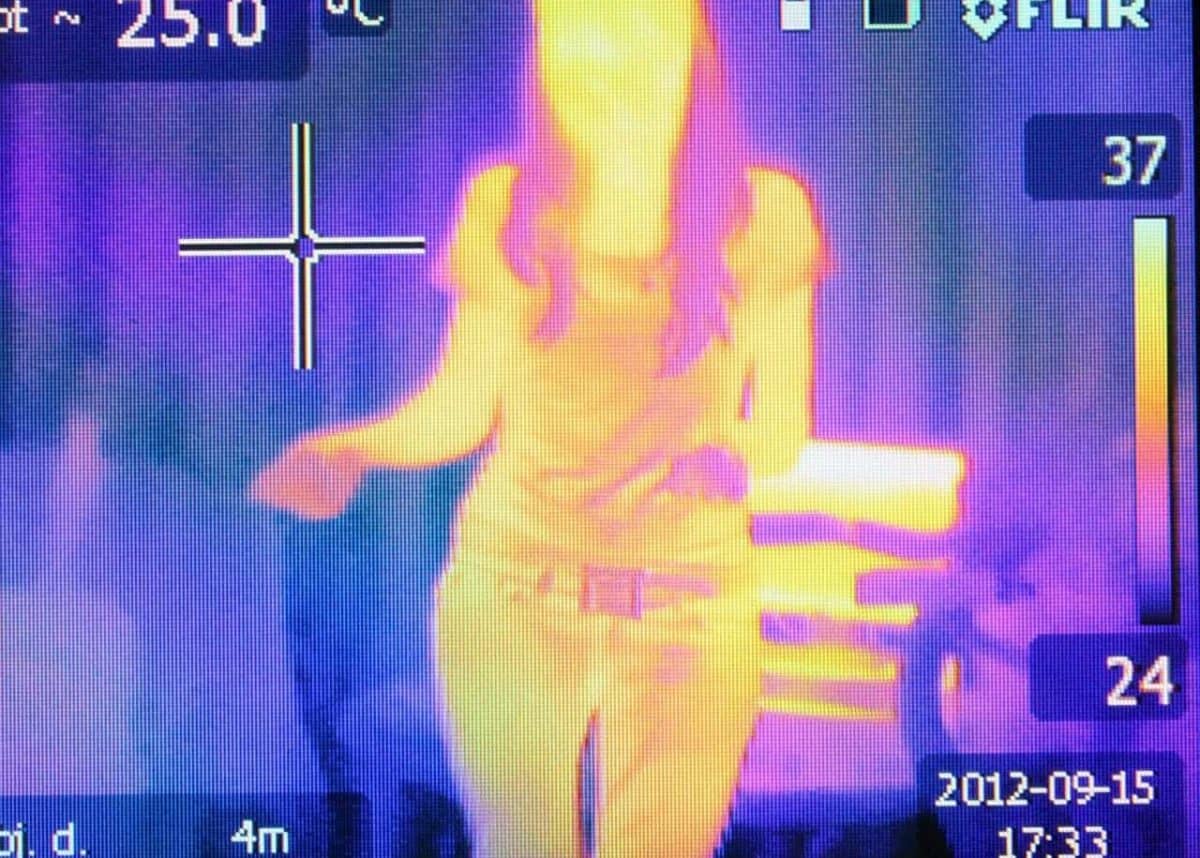
Thermal cameras are already being implemented as a means of detecting people with fever-like symptoms in high-traffic areas such as hospital entrances, shopping centres and office buildings, and potentially mass-attendance sporting events when they resume.
People who show up as having high temperatures can then be directed to further assessment and encouraged to isolate to help curb the spread of COVID-19.
But the evidence suggests thermal cameras are far from a perfect solution, offering limited accuracy if set up incorrectly, and raising data privacy concerns.
Accuracy is important
Despite the urgency of the COVID-19 situation, we cannot abandon accuracy. If temperature screening incorrectly detects many people as having a fever, then healthcare services will be burdened by needless secondary assessments.
On the other hand, if the technology fails to detect many people who do have symptoms it may create a false sense of security and lead to future COVID-19 clusters. This is especially important in high-risk environments such as aged-care facilities or hospitals.


The most accurate tools for measuring temperatures are the ones used to assess hospital patients for fever, such as mouth, ear and rectal thermometers. However, these tools require training to use correctly, and bring patients into direct contact with a device which must then be cleaned before it can be used again.
The requirements for training and cleaning are a major drawback during a pandemic and are the reason these tools are not widely used for mass fever screening.
Why thermal cameras?
As a result, both government and industry are deploying automated systems involving infrared thermal cameras instead to perform fever-screening from facial temperature measurements. Many such systems have already been deployed in high-risk locations across the country.
These systems are sometimes seen as a magic bullet for mass fever screening. Measurements are almost instant, there is no contact, and data can be viewed at a distance, so there is minimal disruption in public places and little risk of cross-contamination or harm to the operator. And the system can be used with minimal training.
Lack of evidence
However, there is a glaring lack of clinical evidence for thermal camera-based fever screening solutions. So far there has been no multi-site, large-scale independent clinical trial to assess the accuracy of these systems. To our knowledge, no thermal imaging system has been approved as a medical device by the Australian Therapeutic Goods Administration.
This is concerning, particularly as these systems are being trusted to protect high-risk areas. It is possible that in the rush to find solutions to keep people safe, the limitations of such systems have been overlooked.
The limits of thermal cameras
The most crucial limitation of these technologies is biological. The skin on a person’s face is not one single temperature, and does not uniformly reflect their core body temperature, which is needed to assess fever.
After entering a building on a cold winter day, a person’s forehead temperature stays unusually low for minutes afterwards. This could potentially allow a feverish person to be incorrectly screened.
Research suggests the region of the face that best reflects core temperature is the inner corner of the eye. This is a very small target, so to measure this area an individual must be very close, and directly facing the camera. Even a small change in angle has been found to alter the readings.
Even if the system can measure the right part of the face, many other factors can change the reading, such as room temperature, airflow, wearing glasses, image background, and skin dampness.
In 2017, the International Organization for Standardization (ISO) released guidelines on how to deploy thermal camera systems to account for these factors. The recommendations include only measuring a single person at a time, keeping the subject and camera close, and ensuring each person pauses while directly facing the camera.
Privacy problems
In addition, many thermal camera systems include facial recognition capabilities to make it easier to identify anyone who triggers an alert. Hospitals, shopping centres and office buildings around the world are now receiving facial images of every person who enters their facilities.
Significant questions remain over whether these organisations are up to date with the required security practices to collect and store this type of private information safely.
In places such as aged-care facilities and hospitals where the impact of an outbreak could be catastrophic, there is an ethical obligation to follow best-practice protocols, and the advice of experts.
Currently, in the case of thermal cameras for mass fever screening, the obligation would be to ensure the systems follow the recommendations put forward by the ISO, and avoid providers who don’t comply.
More research is needed to investigate this technology and begin developing a library of reliable independent research. This is necessary to make sure decisions about this technology can be made on the basis of firm evidence during COVID-19 and future pandemics.
Scott Adams, Postdoctoral Biomedical Engineering Researcher, Deakin University; Abbas Kouzani, Professor of Engineering, Deakin University, and Tracey Bucknall, Professor, Chair in Nursing & Director of Nursing Research, Alfred Health, Deakin University
This article is republished from The Conversation under a Creative Commons license. Read the original article.







