
Mark Patrick Taylor, Macquarie University; Neda Sharifi Soltani, Macquarie University, and Scott P. Wilson, Macquarie University
Australians are eating and inhaling significant numbers of tiny plastics at home, our new research shows.
These “microplastics”, which are derived from petrochemicals extracted from oil and gas products, are settling in dust around the house.
Some of these particles are toxic to humans — they can carry carcinogenic or mutagenic chemicals, meaning they potentially cause cancer and/or damage our DNA.
We still don’t know the true impact of these microplastics on human health. But the good news is, having hard floors, using more natural fibres in clothing, furnishings and homewares, along with vacuuming at least weekly can reduce your exposure.
What are microplastics?
Microplastics are plastic particles less than five millimetres across. They come from a range of household and everyday items such as the clothes we wear, home furnishings, and food and beverage packaging.
We know microplastics are pervasive outdoors, reaching remote and inaccessible locations such as the Arctic, the Mariana Trench (the world’s deepest ocean trench), and the Italian Alps.


Our study demonstrates it’s an inescapable reality that we’re living in a sea of microplastics — they’re in our food and drinks, our oceans, and our homes.
What we did and what we found
While research has focused mainly on microplastics in the natural environment, a handful of studies have looked at how much we’re exposed to indoors.
People spend up to 90% of their time indoors and therefore the greatest risk of exposure to microplastics is in the home.
Our study is the first to examine how much microplastic we’re exposed to in Australian homes. We analysed dust deposited from indoor air in 32 homes across Sydney over a one-month period in 2019.
We asked members of the public to collect dust in specially prepared glass dishes, which we then analysed.
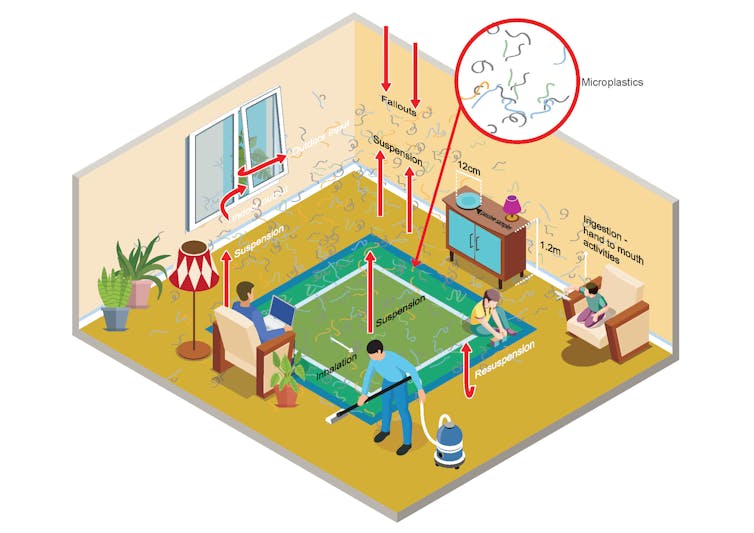
We found 39% of the deposited dust particles were microplastics; 42% were natural fibres such as cotton, hair and wool; and 18% were transformed natural-based fibres such as viscose and cellophane. The remaining 1% were film and fragments consisting of various materials.
Between 22 and 6,169 microfibres were deposited as dust per square metre, each day.
Homes with carpet as the main floor covering had nearly double the number of petrochemical-based fibres (including polyethylene, polyamide and polyacrylic) than homes without carpeted floors.
Conversely, polyvinyl fibres (synthetic fibres made of vinyl chloride) were two times more prevalent in homes without carpet. This is because the coating applied to hard flooring degrades over time, producing polyvinyl fibres in house dust.
Microplastics can be toxic
Microplastics can carry a range of contaminants such as trace metals and some potentially harmful organic chemicals.
These chemicals can leach from the plastic surface once in the body, increasing the potential for toxic effects. Microplastics can have carcinogenic properties, meaning they potentially cause cancer. They can also be mutagenic, meaning they can damage DNA.
However, even though some of the microplastics measured in our study are composed of potentially carcinogenic and/or mutagenic compounds, the actual risk to human health is unclear.
Given the pervasiveness of microplastics not only in homes but in food and beverages, the crucial next step in this research area is to establish what, if any, are safe levels of exposure.
How much are we exposed to? And can this be minimised?
Roughly a quarter of all of the fibres we recorded were less than 250 micrometres in size, meaning they can be inhaled. This means we can be internally exposed to these microplastics and any contaminants attached to them.
Using human exposure models, we calculated that inhalation and ingestion rates were greatest in children under six years old. This is due to their lower relative body weight, smaller size, and higher breathing rate than adults. What’s more, young children typically have more contact with the floor, and tend to put their hands in their mouths more often than adults.
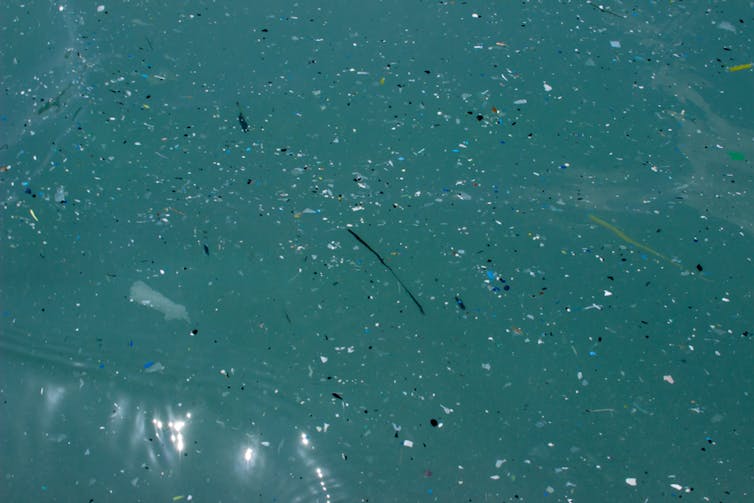
Children under six inhale around three times more microplastics than the average — 18,000 fibres, or 0.3 milligrams per kilogram of body weight per year. They would also ingest on average 6.1 milligrams of microplastics in dust per kg of body weight per year.
For a five-year-old, this would be equivalent to eating a garden pea’s worth of microplastics over the course of a year. But for many of these plastics there is no established safe level of exposure.
Our study indicated there are effective ways to minimise exposure.
First is the choice of flooring, with hard surfaces, including polished wood floors, likely to have fewer microplastics than carpeted floors.
Also, how often you clean makes a difference. Vacuuming floors at least weekly was associated with less microplastics in dust than those that were less frequently cleaned. So get cleaning!
Mark Patrick Taylor, Professor of Environmental Science and Human Health, Macquarie University; Neda Sharifi Soltani, Academic Casual, Macquarie University, and Scott P. Wilson, , Macquarie University
This article is republished from The Conversation under a Creative Commons license. Read the original article.